- Why Does the Electricity Bill Increase in Summer?
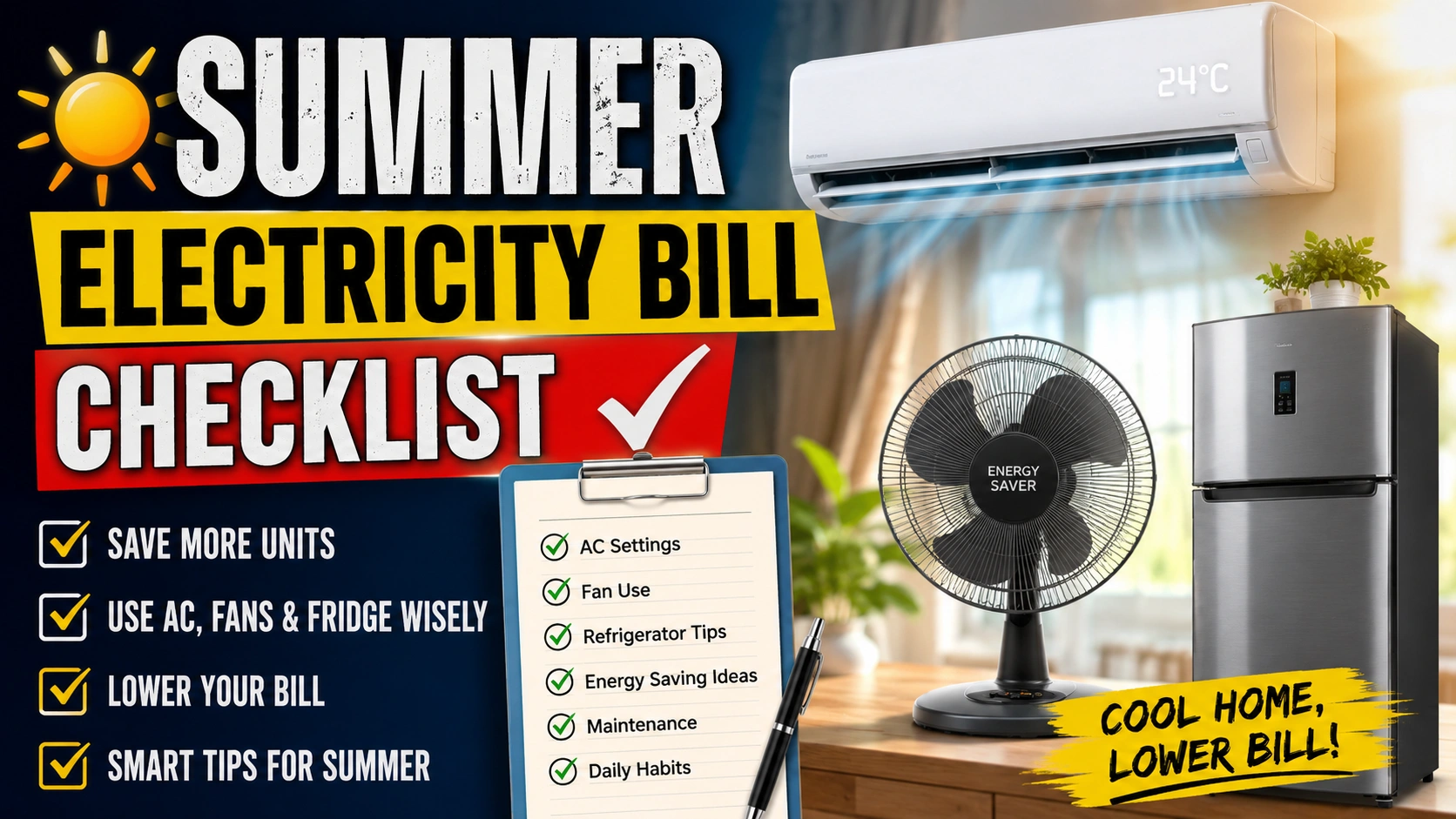
- Quick Summer Electricity Bill Checklist
- 1. Start With the AC
- Keep the AC at a Comfortable Temperature
- Clean the AC Filter
- Keep Doors and Windows Closed
- Do Not Leave the AC Running in an Empty Room
- 2. Use Fans the Smart Way
- Use the Fan With the AC
- Turn Off the Fan When You Leave
- 3. Take Care of Your Refrigerator
- Do Not Keep Opening the Door Again and Again
- Check the Door Seal
- Do Not Pack It Too Tightly
- Keep the Refrigerator Away From Extra Heat
- 4. Keep Curtains Closed During Strong Afternoon Sun
- 5. Check Lights and Other Appliances
- 6. Be Careful With Kitchen Appliances in Summer
- 7. Check Your AC Outdoor Unit
- 8. Do Not Ignore Strange Changes in Your Electricity Bill
- 9. Make a Simple Daily Routine
- Morning
- Afternoon
- Evening
- Before Bed
- 10. A Weekly Summer Electricity Check
- 11. Avoid the “Very Cold Room” Habit
- 12. Keep Your AC and Refrigerator Well Maintained
- My Simple Summer Rule
- Important Summer Electricity Bill Information
- 5 to 7 FAQ for Summer Electricity Bill Tips
- 1. What are the best summer electricity bill tips for AC use?
- 2. Does running a fan with AC help save electricity?
- 3. Should I turn off my refrigerator at night to save electricity?
- 4. Why is my electricity bill higher in summer?
- 5. Can curtains really help reduce cooling needs?
- 6. How often should I check my AC filter?
- 7. What should I do if my electricity bill suddenly becomes unusually high?
- Conclusion
Summer is a lovely season in many ways, but there is one thing I do not enjoy seeing in summer — the electricity bill!
As the temperature goes up, we naturally use the AC more. Fans run for longer hours, the refrigerator works harder, and sometimes we forget about lights, chargers, TVs, coolers, and other appliances. Before we know it, the electricity bill arrives and gives us a little shock.
Over the years, I have learned that small daily habits can make a real difference. We do not have to stop using our AC or sit without a fan just to save electricity. The better idea is to use our appliances wisely.
In this article, I am sharing my simple summer electricity bill tips for using AC, fans, and refrigerators. These are easy things that most families can follow without making life uncomfortable.
“Saving electricity does not mean living without comfort. It means using what we have a little more wisely.”
Why Does the Electricity Bill Increase in Summer?
Summer usually means more cooling. The AC may run for many hours every day, especially during the afternoon and night. Fans may also stay switched on for most of the day.
The refrigerator is another appliance that runs every day. During hot weather, we may open its door more often for cold water, fruits, drinks, and other food. Every time the refrigerator door is opened, warm air enters and the appliance has to work to bring the temperature back down.
The Department of Energy also recommends practical summer steps such as keeping window coverings closed during hot parts of the day, maintaining air-conditioner filters, and switching off fans when leaving a room.
So, instead of worrying about the bill after it arrives, I prefer to follow a simple checklist throughout the summer.
Quick Summer Electricity Bill Checklist
| Appliance or Area | Simple Check | Good Habit |
|---|---|---|
| AC | Check filter and settings | Keep a comfortable temperature instead of making the room extremely cold |
| Fans | Check where they are running | Turn them off when nobody is using the room |
| Refrigerator | Check door seal and temperature | Keep the door closed as much as possible |
| Windows | Check curtains and sunlight | Keep curtains closed during strong afternoon sun |
| Lights | Check empty rooms | Switch off lights when leaving |
| Chargers | Check unused chargers | Unplug when not needed |
| Kitchen | Check heat-producing appliances | Avoid unnecessary oven use on very hot days |
| Appliances | Check standby power | Switch off or unplug equipment that is not being used |
Read More: How to Clean High Touch Surfaces Around the Home
1. Start With the AC
For many homes, the AC is the first thing to look at when trying to control a summer electricity bill.
I understand why. When the outside temperature is very high, there is nothing better than walking into a cool room. But there are a few simple ways to use the AC more sensibly.
Keep the AC at a Comfortable Temperature
There is no need to make the room freezing cold.
Choose a temperature that feels comfortable for your family. A very low setting can make the AC work harder for longer periods.
The Department of Energy recommends keeping the summer thermostat as high as is comfortably possible and notes that a smaller difference between indoor and outdoor temperatures can reduce cooling energy use.
So, rather than constantly changing the temperature, choose a comfortable setting and let the AC do its job.
Clean the AC Filter
A dirty filter can reduce airflow and make the AC work harder.
Make checking the filter part of your summer routine. How often it needs cleaning or replacement depends on the type of AC and the manufacturer’s instructions.
A clean filter is a small thing, but it should not be ignored.
The Department of Energy specifically recommends cleaning or replacing AC filters regularly and says maintenance can improve cooling efficiency.
Keep Doors and Windows Closed
If the AC is running, try not to keep opening the door every few minutes.
Also check whether cool air is escaping through gaps around doors or windows. Simple curtains, shades, and properly sealed openings can help keep the indoor space more comfortable.
Do Not Leave the AC Running in an Empty Room
This is one habit that is easy to forget.
If everyone is going out for several hours, there is usually no reason to keep the AC cooling an empty room.
Before leaving, take five seconds and ask:
“Is anyone coming back into this room soon?”
If the answer is no, switch it off.
2. Use Fans the Smart Way
Fans are very useful during summer. Sometimes we turn them on automatically without even thinking about it.
But remember: a fan mainly makes people feel cooler by moving air. It does not actually cool an empty room in the same way an AC does.
That means leaving a fan running in an empty room is simply unnecessary electricity use.
The Department of Energy also advises turning fans off when leaving the room because fans cool people, not rooms.
Use the Fan With the AC
When the AC is running, a ceiling or room fan can help move cool air around the room.
This can make the room feel comfortable without needing to keep lowering the AC temperature.
Turn Off the Fan When You Leave
This is one of my favorite summer electricity bill tips because it costs nothing to follow.
Leaving a room?
Switch off the fan.
Going to the kitchen?
Switch off the bedroom fan.
Everyone is sitting in the living room?
There is no need for fans to run in empty bedrooms.
These little actions become habits after a while.
3. Take Care of Your Refrigerator
The refrigerator is different from the AC and fan because we normally cannot switch it off when we leave the house. It needs to keep food cold.
So the goal is not to stop using it. The goal is to make sure it is working properly.
Do Not Keep Opening the Door Again and Again
I know this one is easier said than done, especially in summer!
We open the fridge for cold water, then close it. A few minutes later we wonder if there is something else inside.
Try to decide what you need before opening the door.
Open, take what you need, and close it.
This simple habit can also help the refrigerator maintain its temperature.
Check the Door Seal
Look at the rubber seal around the refrigerator door.
If the door does not close properly or the seal is damaged, cool air can escape and warm air can enter.
The Department of Energy recommends maintaining refrigerator door gaskets and ensuring the appliance has enough space for proper airflow.
If you notice a serious problem with the door seal, it is better to have it checked rather than ignoring it.
Do Not Pack It Too Tightly
A refrigerator needs proper airflow inside.
Avoid filling it so tightly that air cannot move around the food. At the same time, do not leave the door open while arranging groceries.
Give everything its own place.
This also makes it easier to find what you need quickly.
Keep the Refrigerator Away From Extra Heat
If possible, keep your refrigerator away from direct sunlight and other strong sources of heat.
A cooler location can make it easier for the appliance to manage its temperature.
Also make sure there is enough space around the refrigerator according to the manufacturer’s instructions.
4. Keep Curtains Closed During Strong Afternoon Sun
This is one of the easiest things we can do without spending money.
During very hot afternoons, sunlight coming directly through windows can heat up a room.
Close curtains or blinds during the strongest sunlight, especially on windows that receive direct afternoon sun.
This can help keep the room more comfortable and reduce the amount of work your cooling system needs to do.
The Department of Energy recommends keeping window coverings closed during summer to block heat from the sun.
I especially like this idea because it does not require buying a new appliance.
Sometimes the simplest solution is right in front of us.
5. Check Lights and Other Appliances
When we think about summer electricity bills, we often blame only the AC.
But many small things are also using electricity.
Check:
- Lights in empty rooms
- TVs nobody is watching
- Chargers that are not being used
- Computers left running
- Kitchen appliances
- Exhaust fans
- Decorative lights
Get into the habit of doing a quick check before going to bed.
Walk through the house and ask:
“What is still switched on?”
The Department of Energy recommends turning off lights in unoccupied rooms and unplugging equipment that is not being used.
6. Be Careful With Kitchen Appliances in Summer
The kitchen can become very hot in summer.
An oven or other heat-producing appliance can make the room warmer, which may make you want to use the AC or fan more.
Whenever practical, choose simpler cooking methods that suit the meal and your home.
For example, using a microwave or countertop appliance for a small meal may avoid heating the whole kitchen as much as using a large oven.
The important thing is not to change your entire cooking routine. Just think about whether you really need a large heat-producing appliance for a small job.
7. Check Your AC Outdoor Unit
If you have a split AC, take a look at the outdoor unit.
Make sure it is not blocked by leaves, dust, boxes, or other objects.
Do not try to perform electrical or refrigerant repairs yourself. If the AC is not cooling properly, is making unusual sounds, or appears to have a technical problem, get a qualified technician to inspect it.
Regular maintenance can help an AC work properly and can also help prevent small problems from becoming bigger ones.
8. Do Not Ignore Strange Changes in Your Electricity Bill
Sometimes the bill is higher simply because we used more electricity.
But if your electricity use has not changed much and the bill suddenly becomes much higher, do not automatically assume that summer is responsible.
Check the bill carefully.
Look at:
- Previous meter reading
- Current meter reading
- Number of units used
- Billing period
- Any additional charges
- Whether the reading is actual or estimated, where applicable
If something looks unusual, contact your electricity provider and ask for clarification.
9. Make a Simple Daily Routine
The easiest way to follow summer electricity bill tips is to make them part of your normal routine.
Morning
Open windows only when outdoor conditions are suitable.
Turn off unnecessary lights.
Check that appliances you do not need are switched off.
Afternoon
Close curtains where strong sunlight is entering.
Use the AC and fans sensibly.
Avoid leaving fans running in empty rooms.
Evening
When the outdoor temperature becomes more comfortable, use natural ventilation if conditions allow.
Use fans where appropriate.
Before Bed
Check:
- AC setting
- Fans
- Lights
- TV
- Chargers
- Kitchen appliances
This takes only a few minutes.
10. A Weekly Summer Electricity Check
Once a week, take a few minutes to check the appliances around your home.
Weekly checklist:
- Check AC filter
- Check refrigerator door seal
- Make sure refrigerator has enough airflow space
- Check fans for dust
- Check unused lights
- Check chargers and electronics
- Look at your electricity meter or usage information
- Compare your current usage with the previous period
You do not need to do everything every day.
A weekly check is enough for many of these things.
11. Avoid the “Very Cold Room” Habit
One mistake I have seen many people make is setting the AC extremely low because they want the room to cool quickly.
But setting the AC colder does not necessarily mean the room will cool instantly.
It is better to choose a comfortable temperature and give the system time to work.
Also, if the room becomes too cold, you may end up switching the AC off and on repeatedly.
A steady and sensible routine is usually easier.
12. Keep Your AC and Refrigerator Well Maintained
Maintenance is not just about saving electricity. It is also about keeping appliances useful for longer.
For the AC, follow the manufacturer’s maintenance instructions.
For the refrigerator, keep the door seal clean and check for problems.
Do not ignore unusual sounds, poor cooling, water leakage, or other signs that something may not be working properly.
A small problem can sometimes become a bigger repair if it is ignored.
My Simple Summer Rule
After many summers, I have made one simple rule for myself:
“Use what you need, switch off what you don’t need, and maintain what you use every day.”
It sounds very simple, but that is exactly why it works.
We do not need to make summer uncomfortable just to save electricity. We only need to stop wasting electricity.
Important Summer Electricity Bill Information
| What to Check | Why It Matters | Simple Action |
|---|---|---|
| AC filter | Dust can reduce airflow | Clean or replace as recommended |
| AC temperature | Very low settings can increase cooling demand | Use a comfortable setting |
| AC doors/windows | Open doors can let cool air escape | Keep cooled rooms closed |
| Fans | Fans cool people, not empty rooms | Switch off when leaving |
| Refrigerator door | Frequent opening lets warm air enter | Open only when needed |
| Refrigerator seal | Damaged seals can waste cooling | Check the rubber gasket |
| Refrigerator location | Heat and poor airflow can affect operation | Follow the manufacturer’s spacing guidance |
| Curtains | Direct sunlight heats rooms | Close them during strong sun |
| Lights | Empty rooms do not need lighting | Switch them off |
| Chargers | Unused electronics can consume standby power | Unplug when practical |
| Electricity bill | Unexpected increases should be checked | Compare usage with previous bills |
5 to 7 FAQ for Summer Electricity Bill Tips
1. What are the best summer electricity bill tips for AC use?
The best habits are to keep the AC at a comfortable temperature, clean or replace its filter as recommended, keep doors and windows closed while cooling, and switch the AC off when it is not needed. Regular maintenance is also important.
2. Does running a fan with AC help save electricity?
A fan can help circulate cool air and make people feel more comfortable. This may allow you to use the AC at a somewhat higher comfortable setting. But remember to switch the fan off when nobody is in the room.
3. Should I turn off my refrigerator at night to save electricity?
Generally, no. A refrigerator is designed to keep food cold continuously. Instead of switching it off, focus on keeping the door closed, maintaining the door seal, and following the manufacturer’s instructions.
4. Why is my electricity bill higher in summer?
The most common reason is increased electricity use from cooling appliances such as ACs and fans. Longer appliance operating hours, more frequent refrigerator use, and other summer habits can also increase consumption.
5. Can curtains really help reduce cooling needs?
Yes. Curtains and blinds can reduce the amount of direct sunlight entering a room. Keeping strong afternoon sunlight out can help the room stay more comfortable and may reduce the need for cooling.
6. How often should I check my AC filter?
Follow the instructions for your particular AC model. Some filters need regular cleaning, while others may need replacement at different intervals. A dirty filter should not be ignored because it can restrict airflow.
7. What should I do if my electricity bill suddenly becomes unusually high?
First, compare the current bill with previous bills and check the number of units used and the billing period. If the increase does not make sense, contact your electricity provider and ask them to check the bill or meter reading.
Conclusion
Summer electricity bills do not have to become a monthly headache.
We all need ACs, fans, refrigerators, and other appliances to stay comfortable during hot weather. The goal is not to stop using them. The goal is to use them wisely and avoid unnecessary electricity use.
Start with the biggest things first. Check your AC settings and filter. Turn off fans when rooms are empty. Keep refrigerator doors closed as much as possible. Protect rooms from strong afternoon sunlight. Switch off lights and appliances that nobody is using.
Most importantly, do not wait until the electricity bill arrives to think about saving energy.
Make these small habits part of your daily routine.
A few seconds of attention today can help prevent a big surprise on the bill later.
And remember my simple summer rule:
“Cool your home, not your money away.”
If we all become a little more careful with electricity, we can enjoy a comfortable summer without wasting energy.
Want a professional website designed for your business or blog?
Visit eDigitalized for website design and development services.
Need help or support?
Visit our Contact Us page and get in touch with us.
Want to become a blogger and start your own blog?
Visit WP Bazaar for blogging resources, tools, and helpful guides.

How this guide was prepared
This guide is prepared for everyday readers using practical research, usability checks and editorial review. Product-specific claims should be verified against manufacturer instructions before purchase.
- Reviewed: August 26, 2026
- Next review target: February 26, 2027
- Read our Editorial Policy · Request a correction
How did you like this article?
Your feedback helps us make our stories more useful.

Shweta Pandey
My name is Shweta Pandey, I work as a content writer and I love to write articles. With 4 years of blogging experience I am always ready to inspire others and share knowledge to make them a successful blogger.
Related Articles
 Home & Living
AC Electricity Consumption: How Much Electricity Does an AC Use and What Affects the Bill? 7 Powerful Ways to Reduce AC Electricity Consumption and Save Money
An air conditioner can make a hot summer day much more comfortable. After coming home from the heat, switching on the AC…
 Bills & Utilities
Refrigerator Electricity Use Calculation: How to Estimate Monthly Power Cost in India
Step-by-step guide to calculate how much electricity your fridge uses each month (watts × hours × days ÷ 1000), a worked example…
Join the Discussion
Join the conversation and share a useful tip or experience.