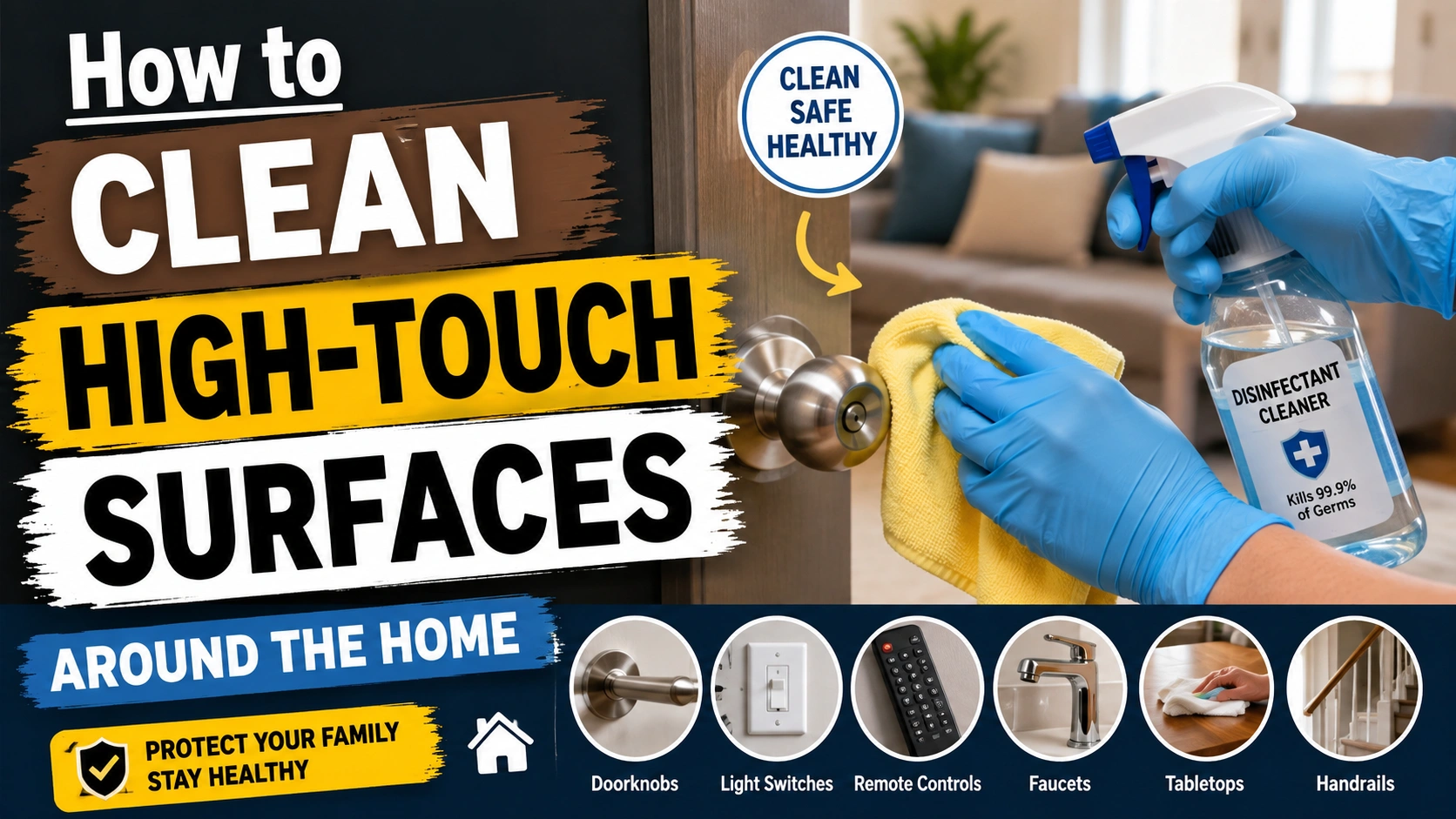
There are some places in our homes that we touch many times a day without even thinking about them. The door handle we grab when we come home, the light switch we use before going to bed, the remote control we hold during our favorite show, and the kitchen faucet we turn on while cooking.
These are called high-touch surfaces, and they deserve a little extra attention when we clean our homes.
I have been cleaning my home for many years, and one thing I have learned is that you do not need to clean every corner of the house every single day. That would simply be too tiring. Instead, I like to focus on the areas that people touch again and again.
If you want to clean high touch surfaces properly, a simple routine can make a big difference. Regular cleaning can remove dirt, dust, and many germs from surfaces. The CDC also recommends cleaning high-touch surfaces regularly, especially when people in the home are sick or after visitors have been around.
“A clean home does not have to be a perfect home. It just needs a little care every day.”
Why High-Touch Surfaces Need Extra Attention
Think about how many hands touch your front door handle in one day. Family members come and go, children touch it, visitors touch it, and sometimes we touch it after handling things outside.
The same thing happens with light switches, drawer handles, faucets, remote controls, phones, and stair rails.
When I clean, I try to remember one simple rule:
The more often we touch something, the more often it deserves our attention.
This does not mean you need to spray strong cleaner everywhere every few hours. In most situations, ordinary cleaning with soap or detergent and water is enough to remove most germs from household surfaces. Disinfecting is generally more useful when someone is sick or there is another reason for extra protection.
The High-Touch Surfaces I Clean Most Often
Here are some of the surfaces I never want to forget.
| High-Touch Surface | Why I Clean It | Simple Cleaning Idea |
|---|---|---|
| Door handles | Touched every day by many people | Wipe with a suitable cleaner and cloth |
| Light switches | Touched several times a day | Use a lightly damp cloth and suitable cleaner |
| Cabinet handles | Hands touch them while cooking | Wipe away grease and dirt |
| Kitchen faucets | Frequently touched while preparing food | Clean with suitable kitchen cleaner |
| Bathroom faucets | Used many times each day | Wipe regularly to remove dirt and water marks |
| Remote controls | Held for long periods | Clean carefully without soaking |
| Phones and tablets | Touched constantly | Follow the manufacturer’s cleaning instructions |
| Stair railings | Many hands use them | Wipe from one end to the other |
| Refrigerator handle | Frequently touched during cooking | Wipe away fingerprints and food residue |
| Toilet flush handle | Touched after using the bathroom | Clean regularly with a suitable product |
| Desk surfaces | Used frequently for work or study | Wipe and dry regularly |
| Drawer handles | Often touched while cooking and cleaning | Wipe with a damp cloth and cleaner |
Read More: 10-Minute Cleaning Tasks That Make a Big Difference
How to Clean High Touch Surfaces Without Making It Complicated
I used to think cleaning meant getting out every bottle and spending hours working through the house. With time, I learned that simple is often better.
To clean high touch surfaces, you usually need only a few basic things: clean microfiber cloths, a suitable household cleaner, water, and sometimes a disinfecting product when it is actually needed.
Start by gathering your supplies. I like to carry everything in one small basket. This saves me from walking back and forth to the kitchen every few minutes.
Always choose a cleaner that is suitable for the surface. A product that is safe for a plastic handle may not be suitable for natural stone, wood, or electronics.
- Start With Door Handles
Door handles are one of the first places I clean when I want to make a quick difference.
Take a clean cloth and use a suitable household cleaner according to its label. Wipe the handle, the area around it, and the part of the door where hands often touch.
Do not forget the inside handles. We often remember the front door because we can see it, but bedroom and bathroom handles are touched just as often.
If the handle is visibly dirty, clean it first rather than simply putting disinfectant over the dirt. Cleaning removes dirt and impurities, and disinfecting can be done afterward when needed.
- Give Light Switches Some Attention
Light switches are easy to forget.
I usually take a slightly damp cloth and gently wipe the switch and the surrounding plate. I never soak the cloth because I do not want liquid getting inside electrical parts.
This is one of those jobs that takes less than a minute per room.
When I am already walking through the house, I simply add light switches to my cleaning routine.
- Do Not Forget Cabinet and Drawer Handles
The kitchen has many high-touch surfaces.
Cabinet handles can collect grease, especially when you are cooking. We may have clean hands when we start preparing dinner, but after touching food, oil, or spices, our hands are not always as clean.
I like to wipe kitchen handles regularly with a cleaner that is suitable for the material. If there is greasy buildup, I give it a little extra attention.
The same goes for bathroom cabinet handles and drawers.
- Clean Kitchen Faucets
The kitchen faucet is another surface that gets touched constantly.
We turn it on before washing our hands, turn it off after handling food, and use it while preparing meals.
Because it is near food preparation areas, I like to keep it clean and dry.
Wipe the faucet, handle, and nearby areas with a suitable cleaner. If there is mineral buildup, use a product designed for that type of surface rather than using something harsh that could damage the finish.
- Remember Bathroom Faucets and Toilet Handles
Bathrooms have several high-touch areas.
Clean the faucet handles, toilet flush handle, cabinet handles, and door handle regularly.
I usually clean these areas after finishing the main bathroom cleaning. It is easy because everything is already in front of me.
A small habit like this can make the bathroom feel much fresher.
- Give Remote Controls a Gentle Clean
Remote controls are probably one of the most forgotten things in the living room.
We sit down, pick up the remote, change channels, put it down, eat something, pick it up again, and repeat the process.
But electronics need special care.
Do not pour or spray liquid directly onto a remote control. Use the manufacturer’s instructions for cleaning the device. The CDC also recommends following manufacturer instructions for electronics such as remote controls, phones, tablets, keyboards, and touch screens.
I prefer to use a cloth that is appropriate for electronics and make sure it is not wet enough for liquid to enter the buttons.
- Clean Phones and Tablets Carefully
Our phones go almost everywhere with us, so it makes sense to include them when we clean high touch surfaces.
However, phones and tablets are delicate. Always check the manufacturer’s instructions before using a cleaning product.
Do not spray cleaner directly into openings, buttons, or ports.
A gentle cleaning routine is better than using too much liquid.
- Wipe Stair Railings
If your home has stairs, do not forget the railing.
Everyone who uses the stairs may hold the same railing. I like to start at one end and slowly wipe along it instead of jumping around from place to place.
Cleaning in a simple direction helps me remember where I have already cleaned.
- Clean the Refrigerator Handle
The refrigerator handle is another little area that gets dirty quickly.
We open the refrigerator while cooking, after touching food, and sometimes with wet or sticky hands.
A quick wipe every few days can make a noticeable difference.
If there is a spill or food residue, clean it as soon as practical rather than letting it build up.
- Do Not Ignore Desk and Study Areas
Desks are often high-touch surfaces too.
If someone studies, works, writes, or uses a computer at the desk every day, the surface can collect fingerprints, crumbs, and dust.
Clear the desk first. Then wipe the surface with a suitable cleaner.
For keyboards, mice, monitors, and other electronics, follow the manufacturer’s cleaning instructions.
Clean High-Touch Surfaces From Clean to Dirty
One little habit has made my cleaning routine much easier: I try not to clean randomly.
I start with areas that are cleaner and move toward areas that need more attention. I also prefer cleaning higher surfaces before lower ones so that dust or cleaning liquid does not fall onto an area I have already finished.
The CDC recommends systematic cleaning methods, including working from higher areas toward lower areas in professional cleaning settings.
At home, this simple approach can save time too.
For example, I may clean a light switch first, then the door handle, then the lower areas, rather than going back and forth.
Use a Fresh Cloth When Needed
A dirty cloth can simply move dirt from one surface to another.
I keep several clean microfiber cloths nearby. When one becomes dirty, I change it instead of trying to clean the whole house with the same cloth.
For bathrooms and kitchens, I especially like to keep cleaning cloths separate.
Wash reusable cloths properly after cleaning and allow them to dry completely.
Should You Clean or Disinfect?
This is something many people wonder about.
Cleaning and disinfecting are not exactly the same thing.
Cleaning removes dirt, impurities, and many germs from surfaces. Disinfecting uses a product designed to kill germs that remain on a surface.
For normal everyday cleaning, you often do not need to disinfect everything.
If someone in your home is sick, however, disinfecting certain high-touch surfaces may be appropriate. Always read the product label and follow its directions.
If you disinfect a surface, pay attention to the required contact time. Some products need the surface to remain wet for a certain amount of time to work properly.
Never mix different cleaning products or chemicals together. This is especially important because some combinations can create dangerous fumes.
How Often Should You Clean High-Touch Surfaces?
There is no need to become obsessed with cleaning.
For everyday homes, I like to focus on the busiest areas regularly. Door handles, switches, faucets, kitchen handles, and remote controls can be added to your normal cleaning routine.
You may want to clean more often if:
- Someone in the home is sick
- You have had many visitors
- A surface becomes visibly dirty
- A high-touch area is used by many people
- Someone in the household is more likely to become seriously ill from an infection
The CDC recommends regularly cleaning high-touch surfaces and cleaning more frequently when circumstances call for it.
A Simple 10-Minute High-Touch Cleaning Routine
If I only have ten minutes, I do not try to clean the entire house.
Instead, I choose the surfaces that people touch the most.
Minute 1–2: Wipe the main door handles.
Minute 3: Clean the most-used light switches.
Minute 4–5: Wipe kitchen cabinet handles and the refrigerator handle.
Minute 6: Clean the kitchen faucet.
Minute 7: Clean bathroom faucet and toilet handle.
Minute 8: Wipe the remote controls carefully.
Minute 9: Clean the stair railing or desk.
Minute 10: Put the cloths away and wash my hands.
That is it.
It may not sound like a huge cleaning session, but these small jobs can make the home feel much fresher.
What I Keep in My Cleaning Basket
I like keeping a small basket ready because it makes cleaning easier.
My basic basket usually has:
- A few clean microfiber cloths
- A suitable general household cleaner
- A suitable bathroom cleaner
- A suitable kitchen cleaner
- Gloves if needed for the product I am using
- A small bag for used cloths
I do not believe you need twenty different cleaning products to have a clean home.
A few suitable products and good cleaning habits are more useful than a cupboard full of bottles.
Be Careful With Cleaning Products
Always read the instructions on a cleaning or disinfecting product before using it.
Some products need gloves or good ventilation. Keep cleaning products away from children and pets. Never mix cleaning chemicals together.
If a surface is delicate, check whether the product is safe before cleaning it.
Wood, natural stone, painted surfaces, screens, and other materials may have special care instructions.
When in doubt, check the manufacturer’s guidance.
High-Touch Cleaning After Someone Has Been Sick
When someone in the house is sick, I pay extra attention to the surfaces that everyone touches.
I clean door handles, switches, faucets, toilet handles, remote controls, phones, and shared tables more often.
If disinfecting is appropriate, I clean the surface first and then use a suitable disinfectant according to the label directions. Cleaning first is important because dirt can make it harder for disinfecting products to work properly.
I also remember to wash my hands after cleaning.
This is not about making the house completely germ-free. It is about being sensible and keeping commonly touched areas clean.
Common Mistakes to Avoid
There are a few mistakes I see people make when cleaning high-touch surfaces.
Using too much product: More cleaner does not always mean better cleaning.
Using one cloth for everything: A dirty cloth can spread dirt around.
Spraying directly onto electronics: This can allow liquid to enter parts of the device.
Skipping the label: Different products have different instructions.
Mixing cleaning products: Never mix cleaning chemicals together.
Forgetting the surrounding area: A door handle is not the only place hands touch. People may also touch the door around the handle.
Cleaning only when something looks dirty: Some frequently touched surfaces may not look dirty but still deserve regular cleaning.
A Little Routine Makes Everything Easier
I have found that cleaning becomes much easier when I stop thinking about it as one giant job.
Instead, I add small tasks to things I already do.
When I vacuum the living room, I wipe the remote control.
When I clean the kitchen, I wipe the cabinet handles.
When I clean the bathroom, I wipe the faucet and toilet handle.
When I walk upstairs, I remember the railing.
These little habits take only a few minutes.
“You do not need a whole free day to keep your home clean. Small jobs count too.”
FAQ: How to Clean High-Touch Surfaces Around the Home
- What are high-touch surfaces in a home?
High-touch surfaces are objects and areas that people touch frequently. Common examples include door handles, light switches, faucets, cabinet handles, remote controls, phones, stair railings, toilet handles, and countertops.
- How often should I clean high-touch surfaces?
High-touch surfaces should be cleaned regularly. You may want to clean them more often when someone is sick, after visitors, or when the surfaces become visibly dirty.
- Is cleaning the same as disinfecting?
No. Cleaning removes dirt, impurities, and many germs from surfaces. Disinfecting uses a product intended to kill germs that remain on a surface. In many normal household situations, regular cleaning is enough.
- Should I disinfect every high-touch surface every day?
Not usually. Regular cleaning is often enough for everyday home care. Disinfecting may be useful when someone is sick or when there is another specific reason to reduce germs further.
- Can I spray cleaner directly on my phone or remote?
It is better not to spray liquid directly onto electronics unless the manufacturer’s instructions specifically allow it. Follow the manufacturer’s cleaning instructions for phones, tablets, remote controls, keyboards, and other electronics.
- What is the easiest way to remember all the high-touch areas?
Make a small routine. Walk through the house and clean door handles, light switches, faucets, handles, remote controls, and other commonly touched surfaces. Doing the same areas in the same order makes it much harder to forget them.
- What should I never do when cleaning high-touch surfaces?
Never mix cleaning chemicals together. Do not use a product on a surface unless it is suitable for that material, and always follow the product label. Keep cleaning products away from children and pets.
Conclusion
Learning how to clean high touch surfaces does not need to make your daily cleaning routine longer or harder.
The secret is simply to pay attention to the places that hands touch the most.
Door handles, light switches, faucets, cabinet handles, remote controls, stair railings, phones, and refrigerator handles are all easy to include in your normal cleaning routine.
I have learned that a home feels much easier to manage when I take care of small jobs regularly instead of waiting until everything becomes a huge mess.
You do not need to spend hours cleaning every day. Take ten minutes, grab a clean cloth, and work through the high-touch areas one by one.
Small cleaning habits can make a big difference.
Post SEO Details
Tag: Home Cleaning, Cleaning Tips, High-Touch Surfaces, House Cleaning, Cleaning Routine, Healthy Home, Everyday Cleaning
Slug: how-to-clean-high-touch-surfaces-around-the-home
Focus Keyword: clean high touch surfaces
Meta Description: Learn how to clean high touch surfaces around the home, including door handles, light switches, faucets, remote controls, and other frequently touched areas.
Schema Description: A practical home cleaning guide explaining how to clean high-touch surfaces around the home, how often to clean them, which areas to focus on, safe cleaning habits, and when disinfecting may be useful.
Read More: Keep your home cleaning routine simple by focusing on frequently touched areas first, then move on to larger cleaning tasks when you have more time.
Important Information: Always choose a cleaning product suitable for the surface, follow the manufacturer’s instructions, avoid mixing cleaning chemicals, and follow special cleaning instructions for electronics.
Want a professional website designed for your business or blog?
Visit eDigitalized for website design and development services.
Need help or support?
Visit our Contact Us page and get in touch with us.
Want to become a blogger and start your own blog?
Visit WP Bazaar for blogging resources, tools, and helpful guides.

How this guide was prepared
This guide is prepared for everyday readers using practical research, usability checks and editorial review. Product-specific claims should be verified against manufacturer instructions before purchase.
- Reviewed: August 24, 2026
- Next review target: February 24, 2027
- Read our Editorial Policy · Request a correction
How did you like this article?
Your feedback helps us make our stories more useful.

Shweta Pandey
My name is Shweta Pandey, I work as a content writer and I love to write articles. With 4 years of blogging experience I am always ready to inspire others and share knowledge to make them a successful blogger.
Related Articles
 Cleaning
The Ultimate Daily Home Cleaning Checklist for a Spotless, Tidy Home
A daily home cleaning checklist does not always require hours of scrubbing, organizing, and washing. In most cases, the secret to maintaining…
 Home & Living
Home Ventilation Checklist for Changing Indian Seasons
A step-by-step home ventilation checklist for India to improve airflow, control humidity and maintain indoor comfort across summer, monsoon and winter—plus a…
Join the Discussion
Join the conversation and share a useful tip or experience.