- What Is a Monsoon Self-Care Routine?
- Start With a Simple Morning Reset
- Take Extra Care of Clothes During Monsoon
- Do Smaller Laundry Loads
- Use an Extra Spin Cycle
- Do Not Hang Everything Too Close Together
- Never Store Clothes While They Are Damp
- Give Your Wardrobe a Monsoon Reset
- Keep Towels Fresh
- Give Your Bedroom a Fresh Feeling
- Do Not Forget the Bathroom
- Keep the Living Room Comfortable
- Be Careful With Room Fresheners
- A Simple Daily Monsoon Self-Care Routine
- Morning
- Afternoon
- Evening
- Night
- Monsoon Personal Care Matters Too
- My Easy Monsoon Home Reset Checklist
- A 15-Minute Monsoon Reset
- What to Do When Clothes Already Smell Damp
- Simple Things I Keep Ready During Monsoon
- Do Not Turn Self-Care Into Another Chore
- FAQ About Monsoon Self-Care Routine
- 1. What is the best monsoon self-care routine for home?
- 2. How can I stop clothes from smelling during monsoon?
- 3. How can I keep my room fresh during rainy weather?
- 4. Should I keep my wardrobe open during monsoon?
- 5. How can I dry clothes indoors during monsoon?
- 6. What should I do if my home has a persistent damp smell?
- 7. What should be included in a daily monsoon self-care routine?
- Conclusion
- Post Details
- What Is a Monsoon Self-Care Routine?
- Start With a Simple Morning Reset
- Take Extra Care of Clothes During Monsoon
- Do Smaller Laundry Loads
- Use an Extra Spin Cycle
- Do Not Hang Everything Too Close Together
- Never Store Clothes While They Are Damp
- Give Your Wardrobe a Monsoon Reset
- Keep Towels Fresh
- Give Your Bedroom a Fresh Feeling
- Do Not Forget the Bathroom
- Keep the Living Room Comfortable
- Be Careful With Room Fresheners
- A Simple Daily Monsoon Self-Care Routine
- Morning
- Afternoon
- Evening
- Night
- Monsoon Personal Care Matters Too
- My Easy Monsoon Home Reset Checklist
- A 15-Minute Monsoon Reset
- What to Do When Clothes Already Smell Damp
- Simple Things I Keep Ready During Monsoon
- Do Not Turn Self-Care Into Another Chore
- FAQ About Monsoon Self-Care Routine
- 1. What is the best monsoon self-care routine for home?
- 2. How can I stop clothes from smelling during monsoon?
- 3. How can I keep my room fresh during rainy weather?
- 4. Should I keep my wardrobe open during monsoon?
- 5. How can I dry clothes indoors during monsoon?
- 6. What should I do if my home has a persistent damp smell?
- 7. What should be included in a daily monsoon self-care routine?
- Conclusion
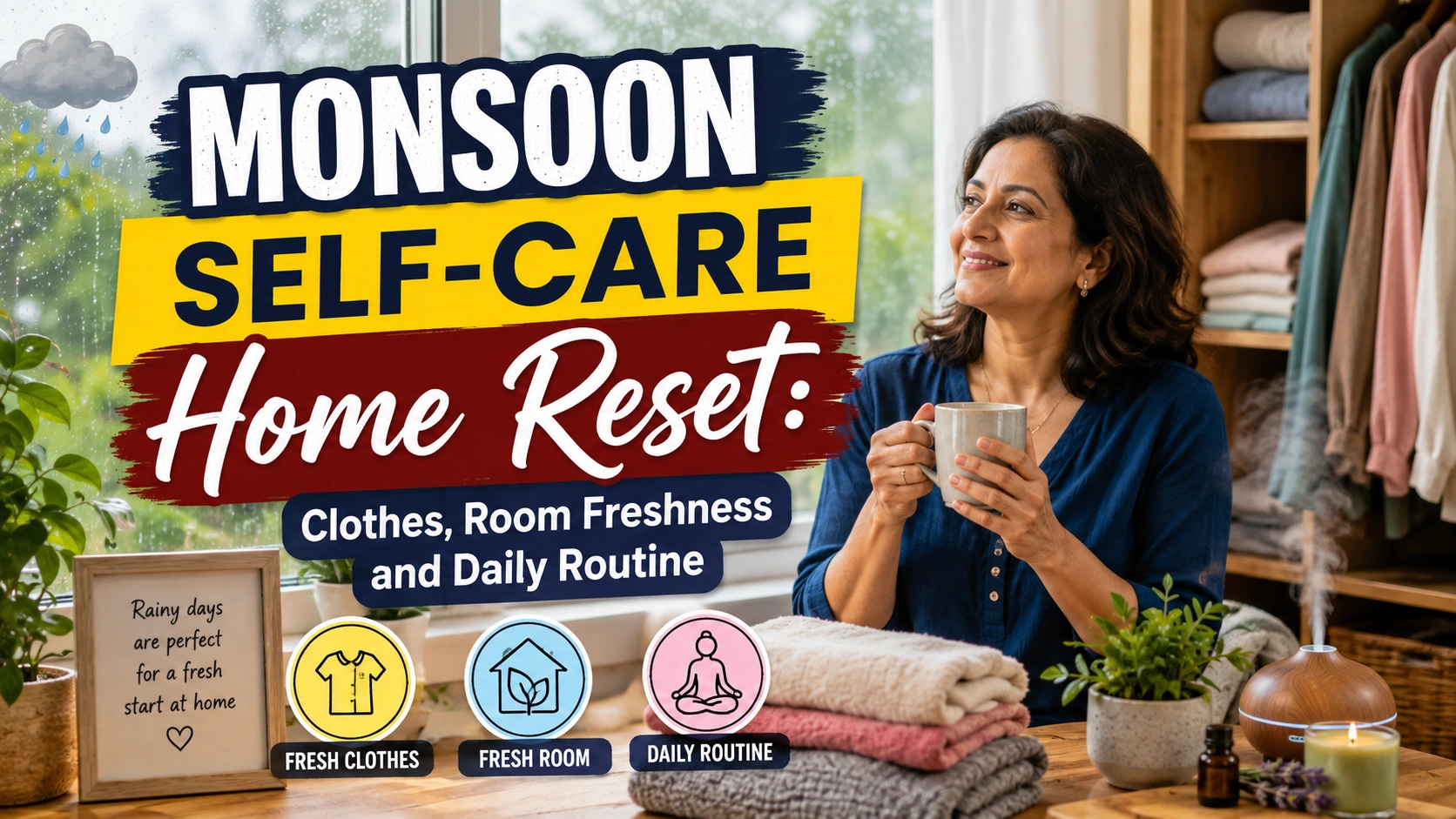
monsoon self care routine: Monsoon is one of my favourite seasons. I love the sound of rain, the cool air, and those quiet afternoons when the weather makes you want to sit with a cup of tea. But after a few days of continuous rain, there is another side of the monsoon that every homemaker knows very well.
Clothes take longer to dry. Towels start smelling damp. Rooms feel a little closed. Wardrobes can develop a musty smell, and even a clean home may not feel as fresh as it did during the dry months.
This is why I like to do a small monsoon self-care routine for myself and my home. I do not mean spending the whole day cleaning. For me, self-care during the rainy season is about making small changes that help me feel comfortable, fresh and peaceful at home.
As I always say, “A fresh home can make an ordinary rainy day feel special.”
The monsoon is a good time to slow down a little and reset our daily habits. We can take care of our clothes, keep our rooms fresh, and also give ourselves some proper rest.
What Is a Monsoon Self-Care Routine?
A monsoon self-care routine is simply a set of small daily habits that help you take care of yourself and your home during the rainy season.
It can include things like drying clothes properly, airing your bedroom, changing damp towels, keeping your wardrobe organised, taking a warm shower after getting wet in the rain, drinking enough water and getting proper sleep.
It does not have to be complicated.
In fact, I believe the best routine is the one that you can actually follow every day.
During monsoon, humidity can make clothes and rooms feel damp. Poor airflow can also allow unpleasant smells to stay inside the house. Keeping wet clothes away from closed spaces, allowing air to move around the room and making sure clothes are completely dry before storing them can make a big difference.
Start With a Simple Morning Reset
I like to start my day by opening the curtains and windows whenever the weather allows.
Of course, during heavy rain I do not keep windows open if rainwater is coming inside. But whenever there is a dry or breezy period, I let some fresh air move through the room.
Then I make the bed.
It sounds like a very small thing, but making the bed gives me a feeling that the day has properly started. I also remove any damp clothes, towels or other items from the bedroom.
A room can look clean but still feel uncomfortable if wet things are lying around.
My simple morning reset is:
- Open curtains and windows when practical.
- Make the bed.
- Remove used clothes from chairs and the floor.
- Hang damp towels properly.
- Check for moisture around windows.
- Put away anything that does not belong in the room.
- Let fresh air circulate whenever possible.
I do not try to clean the whole house every morning. A 10-minute reset is often enough to make a room feel much better.
Read More:Monsoon Pantry Checklist to Protect Dry Food From Moisture
Take Extra Care of Clothes During Monsoon
Laundry is probably the biggest monsoon headache in many homes.
During sunny weather, clothes can dry quickly. During the rainy season, high humidity and less sunlight can make drying much slower. Clothes that remain damp for too long may develop a musty smell.
One habit I never ignore is taking clothes out of the washing machine soon after the wash is finished.
Leaving wet clothes inside the machine for many hours is not a good idea. If I know the weather is going to stay rainy, I plan my laundry around the time when I have space to dry everything properly.
Do Smaller Laundry Loads
If possible, I prefer smaller loads during the monsoon.
When too many clothes are packed together on a drying stand, air cannot move freely around them. Giving each item some space helps with drying.
This may mean doing laundry more often, but I find it easier than having a huge pile of half-dry clothes.
Use an Extra Spin Cycle
If your washing machine has a suitable extra-spin option, it can help remove more water from clothes before drying.
This is especially useful for thicker clothes, towels and bedsheets.
The less water left in the fabric, the easier it is for the clothes to dry.
Do Not Hang Everything Too Close Together
This is one mistake I used to make.
I would fill the drying stand because I wanted to finish the laundry quickly. But the clothes would take much longer to dry.
Now I leave some space between garments.
Shirts, trousers and bedsheets need room for air to move around them. Good airflow is one of the simplest ways to improve indoor drying during rainy weather.
Never Store Clothes While They Are Damp
This is a very important monsoon rule.
Even if clothes feel almost dry, I check them before folding and putting them inside the wardrobe.
Pay special attention to:
- Towels
- Bedsheets
- Jeans
- Thick cotton clothes
- Sweaters
- School or work bags
- Blankets
- Clothes that have been hanging indoors
If something still feels damp, give it more time to dry.
Storing damp clothes inside a closed wardrobe can create a musty smell and may encourage mould growth.
Give Your Wardrobe a Monsoon Reset
Wardrobes often stay closed for long periods during rainy weather. This can make them feel stuffy.
Once or twice a week, when the weather is suitable, I open the wardrobe doors for some time and allow air to move through the space.
I also avoid filling every shelf completely.
A little empty space makes it easier for air to circulate.
If you use moisture absorbers, keep them according to their instructions and replace them when required. Activated charcoal or suitable moisture-absorbing products can be useful in enclosed storage areas.
I also like to check the corners of wardrobes for signs of moisture.
If there is a persistent damp smell, simply adding perfume or room spray is not the real solution. The source of the moisture should be checked.
Keep Towels Fresh
Wet towels are another small problem that can quickly become annoying.
Instead of leaving a towel in a crumpled pile or hanging it where it stays folded, I spread it out as much as possible so that it can dry properly.
Good airflow helps towels dry faster. A towel rack or wide drying area is generally better than leaving a wet towel bunched up.
I also make sure bathroom towels are not left wet for too long.
My simple rule is:
Use it, spread it, dry it.
It takes only a few seconds, but it helps keep the bathroom and bedroom smelling much fresher.
Give Your Bedroom a Fresh Feeling
The bedroom is where we spend many hours, so I like to keep it calm and fresh during monsoon.
I wash bedsheets regularly and make sure they are completely dry before putting them away.
Pillow covers, cushions and blankets also deserve attention because fabrics can hold moisture.
If the sun comes out after several rainy days, I like to use that opportunity to air suitable bedding and fabrics.
I also avoid keeping too many things on the bed. A tidy bed instantly makes the room look cleaner.
Another small habit is to move furniture slightly away from damp walls when possible, especially if there is a known moisture problem.
Persistent dampness on walls should not simply be covered with fragrance. Damp smells can sometimes point to leaks, seepage or mould, so the cause needs attention.
Do Not Forget the Bathroom
Bathrooms naturally have a lot of moisture, and monsoon makes the problem worse.
After bathing, I try to keep the exhaust fan running when appropriate and allow the room to dry.
I also wipe standing water from the floor.
A bathroom that stays wet all day can quickly start feeling unpleasant.
My bathroom reset is very simple:
- Hang towels properly.
- Keep the floor as dry as possible.
- Use the exhaust fan when needed.
- Do not leave wet clothes lying around.
- Clean corners regularly.
- Check for mould or unusual damp patches.
The aim is not to make the bathroom perfect. The aim is to stop moisture from sitting around unnecessarily.
Keep the Living Room Comfortable
The living room often becomes the busiest place in the house during rainy days.
Everyone stays indoors more, so the room can start feeling crowded.
I like to do a quick evening reset.
I fold blankets, arrange cushions, remove cups and plates, clear the table and put away anything that has been left around.
If the weather allows, I open the windows for a little while.
Sometimes I also switch on a fan to keep air moving.
Freshness is not always about fragrance. Sometimes fresh air and a clean space are enough.
Be Careful With Room Fresheners
I enjoy a pleasant smell at home, but I do not think we need to cover every damp smell with a strong fragrance.
If a room smells musty, I first look for the reason.
Could there be wet clothes?
Is a towel not drying?
Is a cupboard damp?
Is there water near a window?
Is there a leak?
Is mould growing somewhere hidden?
Finding the cause is more useful than simply spraying something over it.
Good ventilation, moisture control and keeping damp fabrics dry are important parts of maintaining a fresh-smelling home during monsoon.
A Simple Daily Monsoon Self-Care Routine
Now let us come to the most important part — taking care of ourselves.
When the weather is gloomy for several days, our routine can easily become lazy.
We may sleep late, skip exercise, eat at random times and spend too much time sitting indoors.
There is nothing wrong with having a slow rainy day. But I find that keeping a few basic habits makes me feel much better.
Morning
Start with a glass of water.
Freshen up and change into clean, comfortable clothes.
Open curtains and let natural light enter the room when possible.
Make the bed.
Spend a few minutes tidying your bedroom.
Then have a proper breakfast.
Afternoon
Keep lunch simple and regular.
If you have been working or studying for a long time, take a short break.
Stand up, stretch gently and move around the house.
Check your laundry and make sure wet clothes have enough space to dry.
If there is a break in the rain, use the opportunity to improve airflow in the home.
Evening
This is my favourite time during monsoon.
I like to make tea, sit somewhere comfortable and take a little break.
But before relaxing, I do a quick home reset.
I check the kitchen, bathroom, laundry and bedroom.
I put away clothes and remove anything damp.
Then I can sit down without thinking, “Oh, I still have so much work to do.”
Night
Before going to bed, I prepare clothes for the next morning.
I make sure towels are not left wet.
I keep the bedroom reasonably tidy.
Then I try to put my phone away and give myself some quiet time.
A good night’s sleep is one of the simplest forms of self-care.
Monsoon Personal Care Matters Too
A home reset is useful, but we should not forget ourselves.
If you get wet in the rain, change into dry clothes when you can.
Do not sit around for hours in wet clothing.
Keep your feet clean and dry, especially if you have been walking through wet areas.
Take a comfortable shower when needed and keep your personal towels dry.
Hair also deserves a little extra attention during humid weather. Keeping the scalp clean and avoiding going to bed with wet hair are simple habits that can help during monsoon.
And please remember that self-care does not mean buying lots of products.
Sometimes self-care is simply:
“A clean towel, dry clothes, a warm meal and ten quiet minutes for yourself.”
My Easy Monsoon Home Reset Checklist
| Area | Simple Monsoon Reset |
|---|---|
| Clothes | Wash manageable loads and dry clothes with enough space |
| Towels | Spread towels out properly after use |
| Wardrobe | Keep clothes completely dry before storing |
| Bedroom | Air the room whenever weather permits |
| Bathroom | Reduce standing water and improve ventilation |
| Living Room | Clear clutter and arrange cushions |
| Laundry Area | Keep airflow around drying clothes |
| Windows | Wipe moisture when needed |
| Walls | Check for damp patches and leaks |
| Bedding | Wash and dry sheets properly |
| Personal Care | Change out of wet clothes and rest well |
| Daily Routine | Keep regular meals, sleep and small breaks |
A 15-Minute Monsoon Reset
If you are busy, you do not need a full cleaning day.
Set aside just 15 minutes.
For the first five minutes, collect all damp clothes and towels.
For the next five minutes, open suitable windows, arrange the drying rack and clear the bedroom.
For the last five minutes, put away clutter and prepare yourself for the evening.
That is it.
You do not have to deep-clean your entire home every day.
Small habits done regularly are much easier than big cleaning jobs done once in a while.
What to Do When Clothes Already Smell Damp
Sometimes, despite our best efforts, clothes still develop that familiar rainy-season smell.
If this happens, do not simply put them back into the wardrobe.
Wash them again according to the fabric’s care instructions and dry them completely.
Also check the washing machine. A dirty machine can sometimes contribute to unpleasant smells transferring to freshly washed clothes.
If you notice visible mould, persistent dampness or a smell that keeps returning, look for the source rather than trying to hide it with fragrance.
Simple Things I Keep Ready During Monsoon
I like to keep a few useful things ready before the rainy season becomes too wet.
My small monsoon home kit includes:
- Extra clothes hangers
- A sturdy drying rack
- Clean towels
- Moisture absorbers for suitable storage spaces
- Cleaning cloths
- A laundry basket
- Basic cleaning supplies
- An umbrella
- Comfortable indoor clothes
- Extra bedsheet sets
Having these things ready saves time.
There is nothing more irritating than discovering that you need something while the rain is pouring outside.
Do Not Turn Self-Care Into Another Chore
This is something I have learned over the years.
We sometimes make self-care another item on our long to-do list.
Wake up early.
Clean everything.
Exercise.
Cook perfectly.
Organise every cupboard.
Take care of everyone.
And then we wonder why we are tired.
Self-care should not make you more tired.
If you have had a long day, it is perfectly fine to do only the important things.
Maybe today you only wash the towels and tidy the bedroom.
Tomorrow you can clean the wardrobe.
The next day you can wash the bedsheets.
There is no prize for exhausting yourself during monsoon.
A peaceful home is important, but so is a peaceful person living in it.
FAQ About Monsoon Self-Care Routine
1. What is the best monsoon self-care routine for home?
A simple routine includes drying wet clothes properly, keeping rooms ventilated when possible, checking damp areas, cleaning regularly, keeping towels dry and following a steady personal routine with proper meals, rest and sleep.
2. How can I stop clothes from smelling during monsoon?
Avoid leaving wet clothes inside the washing machine for long periods. Use smaller laundry loads when practical, remove excess water with an appropriate spin cycle and hang clothes with enough space for air to move around them. Make sure clothes are completely dry before storing them.
3. How can I keep my room fresh during rainy weather?
Improve airflow whenever weather conditions allow, remove damp clothes and towels, keep bedding dry and avoid overcrowding the room. If a musty smell continues, check for damp walls, leaks or mould instead of only using fragrance.
4. Should I keep my wardrobe open during monsoon?
You can open the wardrobe periodically when conditions are suitable to allow air circulation. Avoid storing damp clothes inside and do not overcrowd shelves. Moisture absorbers can also be used according to their instructions.
5. How can I dry clothes indoors during monsoon?
Use a drying rack in a well-ventilated area, leave space between clothes and remove as much water as practical before hanging them. A fan can help air movement, provided it is used safely and kept away from water.
6. What should I do if my home has a persistent damp smell?
First check for wet fabrics, poor ventilation, damp cupboards, wall moisture, leaks or mould. If the smell keeps returning, the moisture source needs to be addressed. Simply covering the smell with a room freshener will not solve the underlying problem.
7. What should be included in a daily monsoon self-care routine?
Keep it simple. Have regular meals, drink enough water, change out of wet clothes, keep your sleeping area comfortable, move around during the day, take short breaks and get enough sleep. Your routine should make you feel better, not create more pressure.
Conclusion
Monsoon is a beautiful season, but it does require a little extra care.
Clothes need more attention because they take longer to dry. Rooms need better airflow because moisture can make them feel stuffy. Wardrobes need checking because damp clothes and closed spaces can develop unpleasant smells.
But we should also remember ourselves.
A monsoon self-care routine does not have to be difficult or expensive. It can be as simple as changing into dry clothes, making your bed, opening the curtains, drying your towel, drinking a glass of water and sitting quietly with your favourite cup of tea.
For me, the best home reset is not about having a perfect house.
It is about having a home that feels comfortable, clean and peaceful.
So this monsoon, do not try to do everything at once. Pick a few small habits and repeat them every day.
“Take care of your home, but remember to make room for taking care of yourself too.”
Post Details
Tag: Monsoon Home Care, Monsoon Self-Care, Home Reset, Rainy Season Tips, Clothes Care, Room Freshness, Daily Routine
Slug: monsoon-self-care-home-reset-clothes-room-freshness-daily-routine
Focus Keyword: monsoon self care routine
Meta Description: Create a simple monsoon self care routine with easy tips for fresh clothes, dry towels, a clean room, wardrobe care and a peaceful daily routine.
Read More:
Monsoon Home Checklist for Leaks, Dampness and Mould Prevention
Monsoon Pantry Checklist to Protect Dry Food From Moisture
Summer Electricity Bill Checklist for AC, Fans and Refrigerator Use
How to Keep High-Touch Surfaces Clean Around the Home
Schema Description: A practical and easy-to-follow guide to a monsoon self care routine, covering clothes drying, wardrobe care, room freshness, personal care and simple daily habits for a comfortable home during the rainy season.
Monsoon Self-Care Home Reset: Clothes, Room Freshness and Daily Routine
Monsoon is one of my favourite seasons. I love the sound of rain, the cool air, and those quiet afternoons when the weather makes you want to sit with a cup of tea. But after a few days of continuous rain, there is another side of the monsoon that every homemaker knows very well.
Clothes take longer to dry. Towels start smelling damp. Rooms feel a little closed. Wardrobes can develop a musty smell, and even a clean home may not feel as fresh as it did during the dry months.
This is why I like to do a small monsoon self-care routine for myself and my home. I do not mean spending the whole day cleaning. For me, self-care during the rainy season is about making small changes that help me feel comfortable, fresh and peaceful at home.
As I always say, “A fresh home can make an ordinary rainy day feel special.”
The monsoon is a good time to slow down a little and reset our daily habits. We can take care of our clothes, keep our rooms fresh, and also give ourselves some proper rest.
What Is a Monsoon Self-Care Routine?
A monsoon self-care routine is simply a set of small daily habits that help you take care of yourself and your home during the rainy season.
It can include things like drying clothes properly, airing your bedroom, changing damp towels, keeping your wardrobe organised, taking a warm shower after getting wet in the rain, drinking enough water and getting proper sleep.
It does not have to be complicated.
In fact, I believe the best routine is the one that you can actually follow every day.
During monsoon, humidity can make clothes and rooms feel damp. Poor airflow can also allow unpleasant smells to stay inside the house. Keeping wet clothes away from closed spaces, allowing air to move around the room and making sure clothes are completely dry before storing them can make a big difference.
Start With a Simple Morning Reset
I like to start my day by opening the curtains and windows whenever the weather allows.
Of course, during heavy rain I do not keep windows open if rainwater is coming inside. But whenever there is a dry or breezy period, I let some fresh air move through the room.
Then I make the bed.
It sounds like a very small thing, but making the bed gives me a feeling that the day has properly started. I also remove any damp clothes, towels or other items from the bedroom.
A room can look clean but still feel uncomfortable if wet things are lying around.
My simple morning reset is:
- Open curtains and windows when practical.
- Make the bed.
- Remove used clothes from chairs and the floor.
- Hang damp towels properly.
- Check for moisture around windows.
- Put away anything that does not belong in the room.
- Let fresh air circulate whenever possible.
I do not try to clean the whole house every morning. A 10-minute reset is often enough to make a room feel much better.
Take Extra Care of Clothes During Monsoon
Laundry is probably the biggest monsoon headache in many homes.
During sunny weather, clothes can dry quickly. During the rainy season, high humidity and less sunlight can make drying much slower. Clothes that remain damp for too long may develop a musty smell.
One habit I never ignore is taking clothes out of the washing machine soon after the wash is finished.
Leaving wet clothes inside the machine for many hours is not a good idea. If I know the weather is going to stay rainy, I plan my laundry around the time when I have space to dry everything properly.
Do Smaller Laundry Loads
If possible, I prefer smaller loads during the monsoon.
When too many clothes are packed together on a drying stand, air cannot move freely around them. Giving each item some space helps with drying.
This may mean doing laundry more often, but I find it easier than having a huge pile of half-dry clothes.
Use an Extra Spin Cycle
If your washing machine has a suitable extra-spin option, it can help remove more water from clothes before drying.
This is especially useful for thicker clothes, towels and bedsheets.
The less water left in the fabric, the easier it is for the clothes to dry.
Do Not Hang Everything Too Close Together
This is one mistake I used to make.
I would fill the drying stand because I wanted to finish the laundry quickly. But the clothes would take much longer to dry.
Now I leave some space between garments.
Shirts, trousers and bedsheets need room for air to move around them. Good airflow is one of the simplest ways to improve indoor drying during rainy weather.
Never Store Clothes While They Are Damp
This is a very important monsoon rule.
Even if clothes feel almost dry, I check them before folding and putting them inside the wardrobe.
Pay special attention to:
- Towels
- Bedsheets
- Jeans
- Thick cotton clothes
- Sweaters
- School or work bags
- Blankets
- Clothes that have been hanging indoors
If something still feels damp, give it more time to dry.
Storing damp clothes inside a closed wardrobe can create a musty smell and may encourage mould growth.
Give Your Wardrobe a Monsoon Reset
Wardrobes often stay closed for long periods during rainy weather. This can make them feel stuffy.
Once or twice a week, when the weather is suitable, I open the wardrobe doors for some time and allow air to move through the space.
I also avoid filling every shelf completely.
A little empty space makes it easier for air to circulate.
If you use moisture absorbers, keep them according to their instructions and replace them when required. Activated charcoal or suitable moisture-absorbing products can be useful in enclosed storage areas.
I also like to check the corners of wardrobes for signs of moisture.
If there is a persistent damp smell, simply adding perfume or room spray is not the real solution. The source of the moisture should be checked.
Keep Towels Fresh
Wet towels are another small problem that can quickly become annoying.
Instead of leaving a towel in a crumpled pile or hanging it where it stays folded, I spread it out as much as possible so that it can dry properly.
Good airflow helps towels dry faster. A towel rack or wide drying area is generally better than leaving a wet towel bunched up.
I also make sure bathroom towels are not left wet for too long.
My simple rule is:
Use it, spread it, dry it.
It takes only a few seconds, but it helps keep the bathroom and bedroom smelling much fresher.
Give Your Bedroom a Fresh Feeling
The bedroom is where we spend many hours, so I like to keep it calm and fresh during monsoon.
I wash bedsheets regularly and make sure they are completely dry before putting them away.
Pillow covers, cushions and blankets also deserve attention because fabrics can hold moisture.
If the sun comes out after several rainy days, I like to use that opportunity to air suitable bedding and fabrics.
I also avoid keeping too many things on the bed. A tidy bed instantly makes the room look cleaner.
Another small habit is to move furniture slightly away from damp walls when possible, especially if there is a known moisture problem.
Persistent dampness on walls should not simply be covered with fragrance. Damp smells can sometimes point to leaks, seepage or mould, so the cause needs attention.
Do Not Forget the Bathroom
Bathrooms naturally have a lot of moisture, and monsoon makes the problem worse.
After bathing, I try to keep the exhaust fan running when appropriate and allow the room to dry.
I also wipe standing water from the floor.
A bathroom that stays wet all day can quickly start feeling unpleasant.
My bathroom reset is very simple:
- Hang towels properly.
- Keep the floor as dry as possible.
- Use the exhaust fan when needed.
- Do not leave wet clothes lying around.
- Clean corners regularly.
- Check for mould or unusual damp patches.
The aim is not to make the bathroom perfect. The aim is to stop moisture from sitting around unnecessarily.
Keep the Living Room Comfortable
The living room often becomes the busiest place in the house during rainy days.
Everyone stays indoors more, so the room can start feeling crowded.
I like to do a quick evening reset.
I fold blankets, arrange cushions, remove cups and plates, clear the table and put away anything that has been left around.
If the weather allows, I open the windows for a little while.
Sometimes I also switch on a fan to keep air moving.
Freshness is not always about fragrance. Sometimes fresh air and a clean space are enough.
Be Careful With Room Fresheners
I enjoy a pleasant smell at home, but I do not think we need to cover every damp smell with a strong fragrance.
If a room smells musty, I first look for the reason.
Could there be wet clothes?
Is a towel not drying?
Is a cupboard damp?
Is there water near a window?
Is there a leak?
Is mould growing somewhere hidden?
Finding the cause is more useful than simply spraying something over it.
Good ventilation, moisture control and keeping damp fabrics dry are important parts of maintaining a fresh-smelling home during monsoon.
A Simple Daily Monsoon Self-Care Routine
Now let us come to the most important part — taking care of ourselves.
When the weather is gloomy for several days, our routine can easily become lazy.
We may sleep late, skip exercise, eat at random times and spend too much time sitting indoors.
There is nothing wrong with having a slow rainy day. But I find that keeping a few basic habits makes me feel much better.
Morning
Start with a glass of water.
Freshen up and change into clean, comfortable clothes.
Open curtains and let natural light enter the room when possible.
Make the bed.
Spend a few minutes tidying your bedroom.
Then have a proper breakfast.
Afternoon
Keep lunch simple and regular.
If you have been working or studying for a long time, take a short break.
Stand up, stretch gently and move around the house.
Check your laundry and make sure wet clothes have enough space to dry.
If there is a break in the rain, use the opportunity to improve airflow in the home.
Evening
This is my favourite time during monsoon.
I like to make tea, sit somewhere comfortable and take a little break.
But before relaxing, I do a quick home reset.
I check the kitchen, bathroom, laundry and bedroom.
I put away clothes and remove anything damp.
Then I can sit down without thinking, “Oh, I still have so much work to do.”
Night
Before going to bed, I prepare clothes for the next morning.
I make sure towels are not left wet.
I keep the bedroom reasonably tidy.
Then I try to put my phone away and give myself some quiet time.
A good night’s sleep is one of the simplest forms of self-care.
Monsoon Personal Care Matters Too
A home reset is useful, but we should not forget ourselves.
If you get wet in the rain, change into dry clothes when you can.
Do not sit around for hours in wet clothing.
Keep your feet clean and dry, especially if you have been walking through wet areas.
Take a comfortable shower when needed and keep your personal towels dry.
Hair also deserves a little extra attention during humid weather. Keeping the scalp clean and avoiding going to bed with wet hair are simple habits that can help during monsoon.
And please remember that self-care does not mean buying lots of products.
Sometimes self-care is simply:
“A clean towel, dry clothes, a warm meal and ten quiet minutes for yourself.”
My Easy Monsoon Home Reset Checklist
| Area | Simple Monsoon Reset |
|---|---|
| Clothes | Wash manageable loads and dry clothes with enough space |
| Towels | Spread towels out properly after use |
| Wardrobe | Keep clothes completely dry before storing |
| Bedroom | Air the room whenever weather permits |
| Bathroom | Reduce standing water and improve ventilation |
| Living Room | Clear clutter and arrange cushions |
| Laundry Area | Keep airflow around drying clothes |
| Windows | Wipe moisture when needed |
| Walls | Check for damp patches and leaks |
| Bedding | Wash and dry sheets properly |
| Personal Care | Change out of wet clothes and rest well |
| Daily Routine | Keep regular meals, sleep and small breaks |
A 15-Minute Monsoon Reset
If you are busy, you do not need a full cleaning day.
Set aside just 15 minutes.
For the first five minutes, collect all damp clothes and towels.
For the next five minutes, open suitable windows, arrange the drying rack and clear the bedroom.
For the last five minutes, put away clutter and prepare yourself for the evening.
That is it.
You do not have to deep-clean your entire home every day.
Small habits done regularly are much easier than big cleaning jobs done once in a while.
What to Do When Clothes Already Smell Damp
Sometimes, despite our best efforts, clothes still develop that familiar rainy-season smell.
If this happens, do not simply put them back into the wardrobe.
Wash them again according to the fabric’s care instructions and dry them completely.
Also check the washing machine. A dirty machine can sometimes contribute to unpleasant smells transferring to freshly washed clothes.
If you notice visible mould, persistent dampness or a smell that keeps returning, look for the source rather than trying to hide it with fragrance.
Simple Things I Keep Ready During Monsoon
I like to keep a few useful things ready before the rainy season becomes too wet.
My small monsoon home kit includes:
- Extra clothes hangers
- A sturdy drying rack
- Clean towels
- Moisture absorbers for suitable storage spaces
- Cleaning cloths
- A laundry basket
- Basic cleaning supplies
- An umbrella
- Comfortable indoor clothes
- Extra bedsheet sets
Having these things ready saves time.
There is nothing more irritating than discovering that you need something while the rain is pouring outside.
Do Not Turn Self-Care Into Another Chore
This is something I have learned over the years.
We sometimes make self-care another item on our long to-do list.
Wake up early.
Clean everything.
Exercise.
Cook perfectly.
Organise every cupboard.
Take care of everyone.
And then we wonder why we are tired.
Self-care should not make you more tired.
If you have had a long day, it is perfectly fine to do only the important things.
Maybe today you only wash the towels and tidy the bedroom.
Tomorrow you can clean the wardrobe.
The next day you can wash the bedsheets.
There is no prize for exhausting yourself during monsoon.
A peaceful home is important, but so is a peaceful person living in it.
FAQ About Monsoon Self-Care Routine
1. What is the best monsoon self-care routine for home?
A simple routine includes drying wet clothes properly, keeping rooms ventilated when possible, checking damp areas, cleaning regularly, keeping towels dry and following a steady personal routine with proper meals, rest and sleep.
2. How can I stop clothes from smelling during monsoon?
Avoid leaving wet clothes inside the washing machine for long periods. Use smaller laundry loads when practical, remove excess water with an appropriate spin cycle and hang clothes with enough space for air to move around them. Make sure clothes are completely dry before storing them.
3. How can I keep my room fresh during rainy weather?
Improve airflow whenever weather conditions allow, remove damp clothes and towels, keep bedding dry and avoid overcrowding the room. If a musty smell continues, check for damp walls, leaks or mould instead of only using fragrance.
4. Should I keep my wardrobe open during monsoon?
You can open the wardrobe periodically when conditions are suitable to allow air circulation. Avoid storing damp clothes inside and do not overcrowd shelves. Moisture absorbers can also be used according to their instructions.
5. How can I dry clothes indoors during monsoon?
Use a drying rack in a well-ventilated area, leave space between clothes and remove as much water as practical before hanging them. A fan can help air movement, provided it is used safely and kept away from water.
6. What should I do if my home has a persistent damp smell?
First check for wet fabrics, poor ventilation, damp cupboards, wall moisture, leaks or mould. If the smell keeps returning, the moisture source needs to be addressed. Simply covering the smell with a room freshener will not solve the underlying problem.
7. What should be included in a daily monsoon self-care routine?
Keep it simple. Have regular meals, drink enough water, change out of wet clothes, keep your sleeping area comfortable, move around during the day, take short breaks and get enough sleep. Your routine should make you feel better, not create more pressure.
Conclusion
Monsoon is a beautiful season, but it does require a little extra care.
Clothes need more attention because they take longer to dry. Rooms need better airflow because moisture can make them feel stuffy. Wardrobes need checking because damp clothes and closed spaces can develop unpleasant smells.
But we should also remember ourselves.
A monsoon self-care routine does not have to be difficult or expensive. It can be as simple as changing into dry clothes, making your bed, opening the curtains, drying your towel, drinking a glass of water and sitting quietly with your favourite cup of tea.
For me, the best home reset is not about having a perfect house.
It is about having a home that feels comfortable, clean and peaceful.
So this monsoon, do not try to do everything at once. Pick a few small habits and repeat them every day.
“Take care of your home, but remember to make room for taking care of yourself too.”
Want a professional website designed for your business or blog?
Visit eDigitalized for website design and development services.
Need help or support?
Visit our Contact Us page and get in touch with us.
Want to become a blogger and start your own blog?
Visit WP Bazaar for blogging resources, tools, and helpful guides.

How this guide was prepared
This guide is prepared for everyday readers using practical research, usability checks and editorial review. Product-specific claims should be verified against manufacturer instructions before purchase.
- Reviewed: August 28, 2026
- Next review target: February 28, 2027
- Read our Editorial Policy · Request a correction
How did you like this article?
Your feedback helps us make our stories more useful.

Shweta Pandey
My name is Shweta Pandey, I work as a content writer and I love to write articles. With 4 years of blogging experience I am always ready to inspire others and share knowledge to make them a successful blogger.
Related Articles
 Cleaning
The Ultimate Daily Home Cleaning Checklist for a Spotless, Tidy Home
A daily home cleaning checklist does not always require hours of scrubbing, organizing, and washing. In most cases, the secret to maintaining…
 Home & Living
Home Ventilation Checklist for Changing Indian Seasons
A step-by-step home ventilation checklist for India to improve airflow, control humidity and maintain indoor comfort across summer, monsoon and winter—plus a…
Join the Discussion
Join the conversation and share a useful tip or experience.