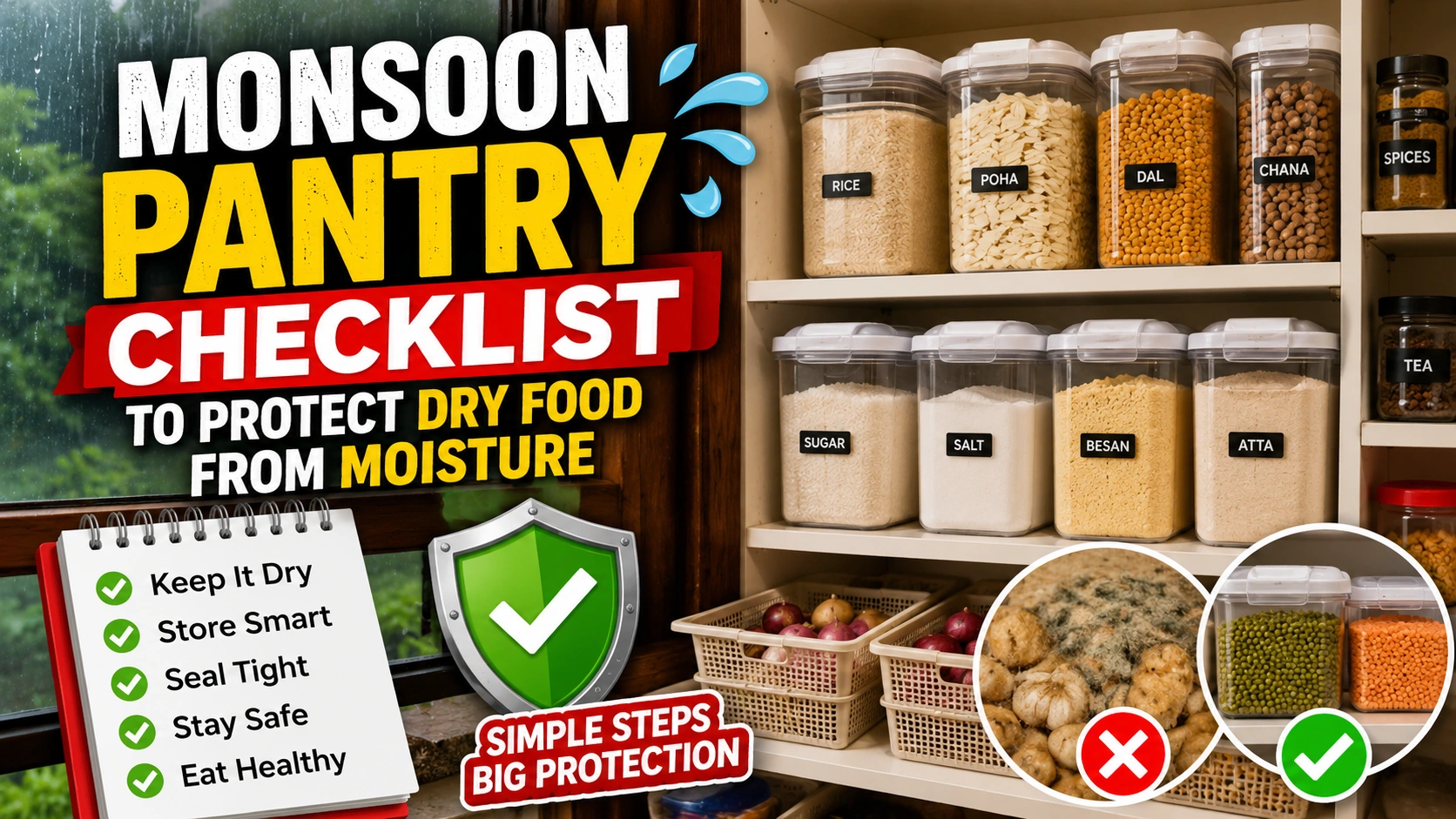
- Why Monsoon Is Hard on Pantry Food
- Monsoon Pantry Storage: The Basic Checklist
- 1. Start With a Complete Pantry Cleaning
- 2. Move Open Packets Into Airtight Containers
- 3. Give Atta and Besan Extra Attention
- 4. Protect Rice, Dal and Other Grains
- 5. Keep Spices Dry
- 6. Be Careful With Sugar and Salt
- 7. Store Biscuits and Snacks Properly
- 8. Take Care of Dry Fruits and Nuts
- 9. Keep Tea and Coffee Away From Moisture
- 10. Do Not Store Food on the Floor
- 11. Keep the Pantry Away From Steam
- 12. Use Dry Spoons and Measuring Cups
- 13. Check for Insects Every Week
- 14. Follow First In, First Out
- 15. Do Not Overfill the Pantry
- 16. Check Containers Before Refilling Them
- 17. Keep Cleaning Products Separate
- 18. Make a Small Monsoon Pantry Routine
- Once a week
- Once every two weeks
- When shopping
- When opening food
- Before storing
- My Simple Monsoon Pantry Storage Table
- Things I Would Not Do During Monsoon
- A 10-Minute Monsoon Pantry Checklist
- What If You Find Moisture in a Container?
- Why Good Monsoon Pantry Storage Saves Money
- Frequently Asked Questions
- 1. What is the best way to protect dry food during monsoon?
- 2. Should rice and dal be stored in airtight containers?
- 3. Why does flour become lumpy during monsoon?
- 4. How often should I check my pantry during monsoon?
- 5. Should I keep dry fruits in the refrigerator?
- 6. Can I store dry food directly on the kitchen floor?
- 7. What should I do if I see mould on dry food?
- Conclusion
The rainy season is one of my favorite times of the year. I love the cool weather, the sound of rain, and the feeling of having a warm cup of tea in the kitchen. But there is one thing I do not enjoy during monsoon: a damp pantry.
During the rainy months, the air becomes more humid. That extra moisture can slowly get into rice, flour, dal, spices, biscuits, snacks, sugar, salt, dry fruits, and other pantry items. Food that looked perfectly fine a few days ago can become soft, lumpy, stale, or even develop signs of mould.
This is why I believe a little extra care with monsoon pantry storage can save both food and money.
The good news is that protecting dry food from moisture does not require an expensive kitchen makeover. A few clean containers, dry shelves, proper habits, and a regular pantry check can make a big difference.
As I often say, “A dry pantry is a happy pantry during the rainy season.”
So, if you are getting your kitchen ready for monsoon, here is a simple checklist you can follow.
Why Monsoon Is Hard on Pantry Food
The biggest problem during monsoon is humidity. Dry foods are meant to stay dry, but they can absorb moisture from the surrounding air when they are not properly sealed.
Rice, flour, pulses, spices, sugar, salt, biscuits, namkeen, cereals, and other dry foods can all be affected. Moisture may cause some foods to become sticky or lumpy. It can also create conditions where mould and pests become a bigger problem.
Food safety guidance recommends keeping dry storage areas clean, dry, well ventilated, protected from pests, and away from excessive moisture. It also recommends keeping food covered and storing containers above the floor.
This is why monsoon pantry storage should be a little different from normal pantry storage.
Monsoon Pantry Storage: The Basic Checklist
Before we get into individual foods, here is a simple checklist you can keep in mind.
| Pantry Task | What to Do | Why It Matters |
|---|---|---|
| Check shelves | Look for dampness, leaks, mould, or insects | Helps find problems early |
| Clean pantry | Wipe shelves and allow them to dry completely | Removes dirt and moisture |
| Use airtight containers | Store opened dry foods in tightly sealed containers | Helps reduce moisture entering |
| Keep food off the floor | Use shelves or racks | Protects food from dampness and pests |
| Use dry spoons | Keep a clean, completely dry spoon with dry foods | Prevents water from entering |
| Check food weekly | Look for insects, clumps, unusual smells, or mould | Helps catch spoilage early |
| Rotate stock | Use older packets before newer ones | Reduces waste |
| Avoid overbuying | Buy quantities you can use in a reasonable time | Reduces long storage in humid weather |
Read More: Refrigerator Buying Guide India: Capacity, 5 Star Rating and Storage Layout
1. Start With a Complete Pantry Cleaning
Before storing anything, give your pantry a proper cleaning.
Remove the packets, jars, bottles, and containers from the shelves. Check every corner carefully. Sometimes moisture collects at the back of a cupboard where we cannot easily see it.
Wipe the shelves with a clean cloth and make sure they are completely dry before putting food back.
If there is a water leak near the pantry, fix it before storing food there. A beautiful storage system will not help if water is entering the cupboard.
I also like to leave the pantry open for some time after cleaning, when the weather and kitchen conditions allow it. The idea is simple: do not trap moisture inside a closed cupboard.
2. Move Open Packets Into Airtight Containers
One of the easiest changes you can make during monsoon is to stop relying on opened packets for long-term storage.
Once you open a packet of rice, dal, flour, sugar, poha, or similar food, transfer it to a clean, dry, airtight container.
A good container should close properly. The lid should not be loose.
Food safety guidance from FSSAI recommends clean storage containers, preferably above ground level, and says airtight containers are useful for cereals and pulses.
You do not need to replace every container in your kitchen at once. Start with the foods you use most often.
3. Give Atta and Besan Extra Attention
Atta and besan are two foods I watch carefully during the rainy season.
Flour can absorb moisture and may become lumpy. If it is stored poorly, its quality can change faster during humid weather.
Keep atta and besan in clean, dry, tightly closed containers. Do not use a wet measuring cup or spoon.
It is also better not to keep very large quantities if your family uses them slowly. Buying smaller quantities more often can be a sensible choice during a humid season.
There is no prize for having the biggest pantry stock. The goal is to keep the food fresh and usable.
4. Protect Rice, Dal and Other Grains
Rice and pulses are common pantry staples in Indian homes, so they deserve a regular check.
When storing rice, dal, chana, rajma, moong, masoor, and similar foods:
- Use clean, dry containers.
- Keep the lids tightly closed.
- Keep containers above the floor.
- Do not mix old and new stock without checking the older food first.
- Look for insects or unusual changes.
- Keep the storage area dry.
FSSAI guidance recommends checking dry stores regularly for signs of spoilage and pests and using the first-in, first-out method.
If you notice anything unusual, do not simply mix the food with a fresh batch.
5. Keep Spices Dry
Spices can quickly lose their quality when exposed to moisture.
Have you ever opened a masala jar and found the powder stuck together? That is often a sign that moisture has entered the container.
Keep spices in tightly closed jars and always use a dry spoon.
It is also helpful to avoid keeping spice containers directly beside a place where steam is produced regularly. For example, the shelf right above the cooking area may not be the best place for your spice collection.
FSSAI guidance notes that spices can be affected by mould when storage conditions are not suitable and recommends dry, well-ventilated storage areas.
6. Be Careful With Sugar and Salt
Sugar and salt are two pantry items that can become hard or lumpy during humid weather.
The simple solution is to keep them in airtight containers and use a completely dry spoon.
Never put a wet spoon into the sugar or salt jar just because you are in a hurry.
It takes only a few seconds to wipe and dry the spoon, but that small habit can help keep the container in better condition.
7. Store Biscuits and Snacks Properly
Biscuits, namkeen, chips, roasted snacks, mathri, and similar foods can quickly lose their crunch during monsoon.
Once a packet is opened, close it properly or transfer the contents to an airtight container.
I especially avoid leaving an open snack packet on the kitchen counter overnight during humid weather.
“Crunchy snacks need dry storage.”
If a food has become soft, smells unusual, or shows visible signs of spoilage, do not assume that reheating or roasting will automatically make it safe.
8. Take Care of Dry Fruits and Nuts
Almonds, cashews, walnuts, raisins, seeds, and other dry fruits also need attention during warm and humid weather.
Keep them in sealed containers and avoid opening the container again and again.
For foods that need refrigeration according to their packaging or storage instructions, follow those instructions. Some nuts and dry fruits may benefit from cooler storage in humid conditions, particularly when you are keeping them for a longer period.
Always check the package instructions and look for changes in smell, appearance, or taste.
9. Keep Tea and Coffee Away From Moisture
Tea leaves and coffee can easily lose their freshness when exposed to air and moisture.
Keep them in tightly closed containers and store them away from steam.
I prefer keeping tea and coffee in a cabinet rather than right next to the stove or sink.
This is a small monsoon pantry storage habit, but it can help protect their smell and taste.
10. Do Not Store Food on the Floor
This is an important pantry rule throughout the year, but it becomes even more useful during monsoon.
Do not keep rice bags, flour bags, cartons, or food containers directly on the floor.
The floor may become damp, especially during heavy rain. Food storage areas should be arranged so that food is kept above the floor.
FSSAI guidance recommends storing food on racks above the floor and away from walls to make cleaning easier and reduce pest access.
If you have limited cupboard space, use a clean rack or raised shelf instead.
11. Keep the Pantry Away From Steam
Steam is another source of moisture that we sometimes forget about.
If your pantry cabinet is next to the stove, kettle, rice cooker, or sink, it may receive more moisture than you realize.
Whenever possible, keep dry food storage away from direct steam.
If your kitchen layout does not allow this, make sure containers are properly sealed and shelves are checked regularly.
12. Use Dry Spoons and Measuring Cups
This sounds like a very small thing, but it is one of the easiest habits to maintain.
Before taking flour, sugar, salt, dal, or spices from a container, make sure your spoon is dry.
Do not take a spoon directly from a wet sink and put it into a dry-food container.
FSSAI also recommends keeping a clean, dry spoon or scoop with stored cereals and pulses.
I keep a few extra spoons in the kitchen so there is no excuse to use a wet one.
13. Check for Insects Every Week
Monsoon can make pantry pests more troublesome.
Once a week, take a few minutes to check your rice, dal, flour, grains, and other dry foods.
Look for:
- Small insects
- Web-like material
- Unusual clumps
- Strange smells
- Discoloration
- Mould
- Damaged packaging
- Moisture inside containers
Government guidance also recommends regular inspection of stored food for signs such as weevils and clumping.
If you find spoiled or visibly mouldy food, it is better to discard it rather than trying to save questionable food.
14. Follow First In, First Out
A simple pantry rule I have followed for years is first in, first out, often called FIFO.
It simply means using the older food before opening the newer packet.
For example, if you already have one packet of rice at home and buy another packet, place the older packet where you will use it first.
This prevents forgotten packets from sitting in the back of the cupboard for months.
Also check best-before or use-by information on packaged foods and follow the manufacturer’s storage instructions.
15. Do Not Overfill the Pantry
It is tempting to buy lots of groceries before or during monsoon. But more food does not always mean better preparation.
If your pantry is packed tightly, it becomes harder to see old packets, clean shelves, and notice moisture or pests.
Buy according to your family’s actual use.
The Indian Express recently highlighted that buying too much during monsoon can increase waste because humidity and warm conditions can affect some everyday foods more quickly.
I prefer a pantry that is organized enough to see everything.
16. Check Containers Before Refilling Them
Never simply empty a new packet into a container without checking the container first.
Finish the older food, clean the container if needed, and make sure it is completely dry before adding a fresh batch.
Even a small amount of moisture left at the bottom can affect newly added dry food.
This is especially important for containers used for flour, rice, dal, sugar, and spices.
17. Keep Cleaning Products Separate
Food should never be stored together with cleaning chemicals or other non-food products.
Keep detergents, cleaners, insect-control products, and similar household items in a separate area away from food.
FSSAI guidance recommends keeping food protected from chemicals and other possible contaminants and storing cleaning materials separately.
This is a basic safety rule that should always be followed.
18. Make a Small Monsoon Pantry Routine
You do not have to spend hours every day checking the kitchen.
I recommend making a simple routine.
Once a week
Check rice, dal, flour, spices, sugar, snacks, and dry fruits.
Look for moisture, insects, mould, strange smells, or damaged packaging.
Once every two weeks
Wipe pantry shelves and check the corners and back areas.
When shopping
Check existing stock before buying more.
When opening food
Transfer it to a suitable container if needed and close it properly after every use.
Before storing
Make sure the container is clean and completely dry.
These small habits are much easier than dealing with a pantry full of spoiled food later.
My Simple Monsoon Pantry Storage Table
| Food Item | Best Simple Storage Habit | Main Thing to Avoid |
|---|---|---|
| Rice | Airtight, dry container | Moisture and pests |
| Dal | Airtight container | Wet spoons |
| Atta | Tightly sealed container | Humidity and long storage |
| Besan | Dry airtight container | Damp air |
| Sugar | Airtight jar | Wet spoons |
| Salt | Airtight jar | Water and steam |
| Spices | Small sealed jars | Steam and moisture |
| Biscuits | Airtight container after opening | Open packets |
| Namkeen | Sealed container | Humid air |
| Dry fruits | Sealed container; follow package storage guidance | Heat and excess moisture |
| Tea | Airtight container | Steam |
| Coffee | Tightly sealed container | Air and moisture |
| Poha | Airtight container | Damp storage |
| Suji | Dry sealed container | Moisture |
| Cereals | Sealed container | Open packets |
Things I Would Not Do During Monsoon
There are a few habits I avoid completely.
I would not keep opened flour bags beside the sink.
I would not use wet spoons in dry food containers.
I would not store food directly on the floor.
I would not keep old and new food mixed together without checking the older stock.
I would not ignore an unusual smell, visible mould, or signs of insects.
I would not keep buying large quantities simply because something is on sale if my family cannot use it soon.
And I would not assume that food is safe just because it looks almost normal. When in doubt about spoiled or contaminated food, it is safer not to eat it.
A 10-Minute Monsoon Pantry Checklist
If you are busy, use this quick checklist.
- Check the pantry for damp areas.
- Wipe shelves and let them dry.
- Check rice and dal for insects.
- Check flour for unusual lumps or smell.
- Check spices for moisture.
- Close all opened packets properly.
- Move opened dry foods into suitable airtight containers.
- Make sure spoons are dry.
- Keep food containers above the floor.
- Move food away from direct steam.
- Put older food where it will be used first.
- Check best-before or use-by dates.
- Remove spoiled or questionable food.
- Avoid buying more than you can use.
What If You Find Moisture in a Container?
If you open a container and notice moisture, stop and inspect the food carefully.
Do not simply close the lid and put it back.
Look for unusual smell, mould, discoloration, insects, or other changes. If the food appears spoiled or contaminated, discard it.
Do not taste questionable food just to decide whether it is safe.
After removing the food, clean and completely dry the container before using it again.
The Indian Grain Storage Management and Research Institute explains that moisture can support the growth of moulds and other microorganisms in stored grains.
This is one reason why keeping pantry food dry is more than just about maintaining good taste.
Why Good Monsoon Pantry Storage Saves Money
At first, buying containers and spending time organizing the pantry may feel like extra work.
But think about how much food gets thrown away when it becomes damp, stale, mouldy, or infested.
A little organization can reduce unnecessary waste.
You also become more aware of what you already have. This means fewer duplicate purchases and less forgotten food at the back of the cupboard.
For me, a well-organized pantry is not about making the kitchen look perfect. It is about knowing what I have, keeping it clean, and using it before it loses its quality.
Frequently Asked Questions
1. What is the best way to protect dry food during monsoon?
The most important steps are keeping the pantry dry, using clean airtight containers, keeping food above the floor, using dry spoons, and checking stored food regularly. These are key parts of good monsoon pantry storage.
2. Should rice and dal be stored in airtight containers?
Yes. Clean, dry, tightly closed containers are a good choice for rice, dal, and other dry foods. FSSAI guidance recommends clean containers and says airtight containers are preferable for cereals and pulses.
3. Why does flour become lumpy during monsoon?
Flour can absorb moisture from humid air. If it is not properly sealed, that moisture can make the flour clump together and may affect its quality.
4. How often should I check my pantry during monsoon?
A quick check once a week is a good habit. Look for insects, mould, unusual smells, moisture, clumps, and damaged packets. Regular inspection can help you notice problems early.
5. Should I keep dry fruits in the refrigerator?
Storage depends on the type of dry fruit, the packaging instructions, and how long you plan to keep it. In warm, humid conditions, some nuts and dry fruits may benefit from cooler storage. Always use a clean, sealed container and follow the package instructions.
6. Can I store dry food directly on the kitchen floor?
It is better not to. Food should be stored above the floor on shelves or racks. This helps protect it from dampness and makes cleaning easier.
7. What should I do if I see mould on dry food?
If dry food has visible mould or other clear signs of spoilage, it is safest to discard it. Do not taste questionable food to check whether it is still good.
Conclusion
Monsoon makes our kitchens a little more challenging, but protecting pantry food does not have to be difficult.
The main rule is simple: keep dry food dry.
Use airtight containers, keep shelves clean and dry, use dry spoons, store food above the floor, check for insects and mould, and follow the first-in, first-out method. Also remember not to buy more food than your family can reasonably use.
Good monsoon pantry storage is really about small habits repeated regularly.
I have learned that you do not need a fancy kitchen or expensive storage system to keep your pantry in good shape. Sometimes, a clean shelf, a properly closed container, and five minutes of checking are enough to prevent a much bigger problem.
So before the next heavy rain arrives, take a little time to look through your pantry.
“A few minutes of care today can save a lot of food tomorrow.”
Want a professional website designed for your business or blog?
Visit eDigitalized for website design and development services.
Need help or support?
Visit our Contact Us page and get in touch with us.
Want to become a blogger and start your own blog?
Visit WP Bazaar for blogging resources, tools, and helpful guides.

How this guide was prepared
This guide is prepared for everyday readers using practical research, usability checks and editorial review. Product-specific claims should be verified against manufacturer instructions before purchase.
- Reviewed: August 27, 2026
- Next review target: February 27, 2027
- Read our Editorial Policy · Request a correction
How did you like this article?
Your feedback helps us make our stories more useful.

Shweta Pandey
My name is Shweta Pandey, I work as a content writer and I love to write articles. With 4 years of blogging experience I am always ready to inspire others and share knowledge to make them a successful blogger.
Related Articles
 Kitchen Organization
Indian Spice Storage System for Daily Use: Refill Stock and Labels
A clear, small-space spice-storage system for Indian cooking: airtight jars, readable labels, a simple refill rule and a daily-use layout that saves…
 Food Storage
 Basics for a More Organized Kitchen
A practical approach to grouping pantry items, using containers and reducing forgotten food.
Join the Discussion
Join the conversation and share a useful tip or experience.