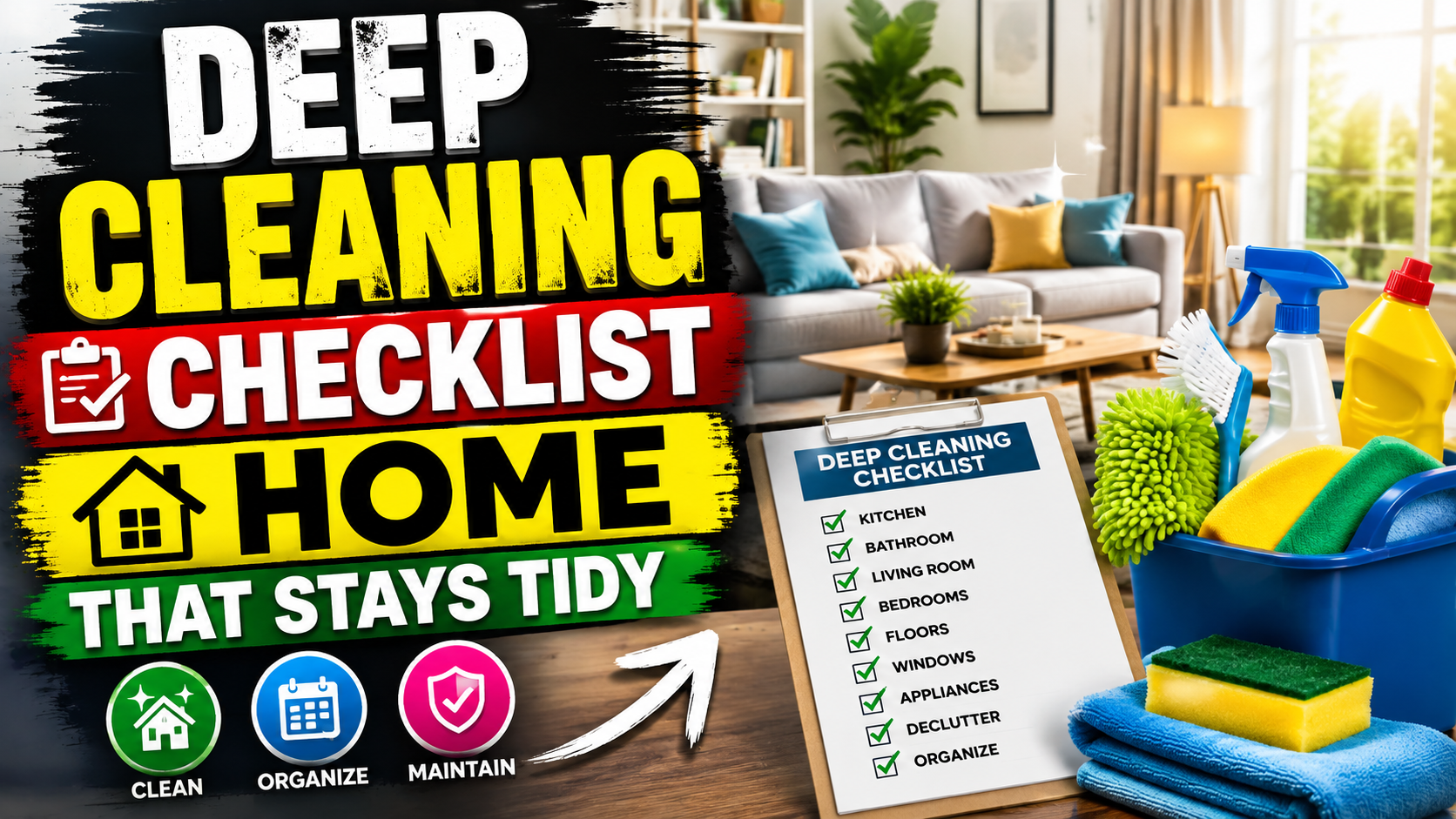
- Why a Daily Cleaning Checklist Matters
- Daily Cleaning Checklist at a Glance
- Morning Cleaning Checklist
- 1. Make Every Bed
- 2. Open Windows When Appropriate
- 3. Put Away Overnight Clutter
- 4. Quick Bathroom Reset
- 5. Check the Kitchen
- Kitchen Daily Cleaning Checklist
- 1. Wash Dishes After Meals
- 2. Wipe Kitchen Countertops
- 3. Clean the Stovetop
- 4. Clean the Kitchen Sink
- 5. Sweep Visible Crumbs
- 6. Check the Refrigerator
- 7. Empty the Garbage When Needed
- Bathroom Daily Cleaning Checklist
- 1. Wipe the Sink
- 2. Keep the Counter Organized
- 3. Hang Towels Properly
- 4. Quick Toilet Check
- 5. Control Shower Moisture
- Bedroom Daily Cleaning Checklist
- 1. Make the Bed
- 2. Put Dirty Clothes in the Laundry Basket
- 3. Put Clean Clothes Away
- 4. Clear Bedside Tables
- 5. Quick Floor Check
- Living Room Daily Cleaning Checklist
- 1. Remove Clutter
- 2. Straighten Cushions
- 3. Remove Cups and Plates
- 4. Organize Remote Controls
- 5. Manage Toys
- 6. Spot-Clean Visible Messes
- Dining Area Daily Cleaning Checklist
- Entryway Daily Cleaning Checklist
- Entryway Reset
- Daily Floor Cleaning Checklist
- Daily Laundry Checklist
- Daily Dust and Clutter Control
- High-Touch Areas to Check Daily
- 10-Minute Daily Cleaning Routine
- Minute 1-2: Make the Bed
- Minute 3: Bathroom Reset
- Minute 4-5: Kitchen Reset
- Minute 6: Clutter Pickup
- Minute 7: Living Room Reset
- Minute 8: Floor Check
- Minute 9: Trash Check
- Minute 10: Final Reset
- 20-Minute Daily Cleaning Routine
- Morning: 8 Minutes
- Evening: 12 Minutes
- 30-Minute Daily Cleaning Routine
- Daily Cleaning Checklist for Families
- Daily Cleaning Checklist for Homes With Pets
- Daily Cleaning Checklist for Busy Working People
- Daily Cleaning vs Deep Cleaning
- How to Build Your Own Deep Cleaning Checklist Home Routine
- Daily
- Weekly
- Monthly
- Seasonal
- Important Cleaning Information Table
- Cleaning Supplies Worth Keeping Ready
- Common Daily Cleaning Mistakes
- 1. Trying to Clean Everything Every Day
- 2. Ignoring the Kitchen Until Night
- 3. Letting Clutter Accumulate
- 4. Keeping Too Many Cleaning Products
- 5. Forgetting High-Traffic Areas
- 6. Creating an Unrealistic Checklist
- 7. Waiting for Motivation
- How to Stay Consistent With Your Cleaning Routine
- Keep the Checklist Visible
- Use the "Don't Leave Empty-Handed" Rule
- Clean While You Wait
- Give Everything a Home
- What to Do When You Miss a Day
- Quick Printable-Style Daily Cleaning Checklist
- Morning
- After Meals
- Evening
- The 5-Minute Emergency Tidy
- Minute 1: Kitchen
- Minute 2: Living Room
- Minute 3: Bathroom
- Minute 4: Entryway
- Minute 5: Floors
- How much time should I spend cleaning every day?
- What should I clean every day?
- Is daily cleaning better than cleaning once a week?
- Should I mop my floors every day?
- Should bathrooms be cleaned every day?
- What is the most important kitchen cleaning task?
- How can I keep my house tidy with children?
- How can I stay consistent with cleaning?
- What is the difference between cleaning and tidying?
- What should I do if my home is already very messy?
- Can a daily checklist reduce deep cleaning work?
- Should everyone in the family participate?
- What should I clean first when I have very little time?
- Conclusion
A daily home cleaning checklist does not always require hours of scrubbing, organizing, and washing. In most cases, the secret to maintaining a tidy home is consistency. A few simple cleaning tasks completed every day can prevent clutter, dust, stains, dirty dishes, and unpleasant odors from building up.
This deep cleaning checklist home guide is designed to help you create a practical daily cleaning routine that fits into a busy lifestyle. Instead of waiting for the weekend and spending several hours cleaning everything at once, you can divide household maintenance into small daily tasks that are easier to complete.
A daily cleaning routine also makes weekly and monthly cleaning much easier. When dishes are handled regularly, surfaces are wiped after use, clothes are put away, and clutter is controlled every day, deeper cleaning becomes less overwhelming.
The goal is not to make your home look like a showroom every minute of the day. A lived-in home will naturally have some activity, belongings, and occasional mess. The goal is to create a system that prevents small messes from becoming large cleaning projects.
Whether you live in an apartment, a small house, or a large family home, the checklist below can be adjusted according to your rooms, lifestyle, family size, pets, and daily schedule.
Why a Daily Cleaning Checklist Matters
Without a routine, cleaning often becomes reactive. You notice dirty dishes when the sink is full, dust when it becomes visible, laundry when the basket is overflowing, and clutter when you suddenly have guests coming over.
A daily checklist changes that approach.
Instead of asking, “What should I clean today?” you already know what needs to be done.
A simple daily routine can help you:
- Keep frequently used rooms looking tidy
- Prevent food residue and spills from becoming difficult stains
- Reduce visible clutter
- Keep kitchen and bathroom surfaces under control
- Prevent dirty laundry from accumulating
- Keep floors reasonably clean
- Make your home more comfortable for family and guests
- Reduce the amount of time needed for weekly cleaning
- Make deep cleaning projects easier
- Create a predictable household routine
The most important principle is simple: clean small messes before they become big messes.
Daily Cleaning Checklist at a Glance
The following table provides a quick overview of the most important tasks.
| Area | Daily Cleaning Task | Best Time | Priority |
|---|---|---|---|
| Bedroom | Make the bed and put away clothes | Morning | High |
| Bathroom | Wipe sink and organize toiletries | Morning/Evening | High |
| Kitchen | Wash dishes and wipe counters | After meals | Very High |
| Living Room | Remove clutter and straighten furniture | Evening | Medium |
| Dining Area | Clear table and wipe surface | After meals | High |
| Floors | Sweep or spot-clean high-traffic areas | Evening | High |
| Laundry | Put dirty clothes in hamper | Throughout day | Medium |
| Entryway | Arrange shoes and remove clutter | Evening | Medium |
| Trash | Empty bins when needed | Evening | High |
| Whole Home | Return items to their proper places | Evening | High |
You do not necessarily need to perform every task at the same time. In fact, dividing cleaning into small morning and evening sessions is often easier than trying to complete everything in one long session.
Read More : Deep Cleaning Checklist for Every Room in an Indian Home
Morning Cleaning Checklist
The morning is a good time to complete quick tasks that immediately make the home look more organized.
You do not need to spend an hour cleaning before starting your day. A 10-to-15-minute routine can make a noticeable difference.
1. Make Every Bed
Making the bed is one of the simplest ways to make a bedroom look tidy.
Straighten the bedsheet, arrange pillows, fold blankets if necessary, and remove anything that does not belong on the bed.
If you have children, encouraging them to make their own beds can also make tidying the bedroom a shared responsibility.
2. Open Windows When Appropriate
If weather, outdoor air quality, security, and ventilation conditions allow, opening windows for a short period can help refresh indoor air.
Avoid opening windows when outdoor pollution, excessive humidity, extreme weather, or other conditions make ventilation undesirable.
3. Put Away Overnight Clutter
Walk through the bedroom, living room, and kitchen.
Look for:
- Clothes left on chairs
- Cups or glasses
- Books
- Chargers
- Toys
- Shoes
- Bags
- Food packaging
- Random items left on tables
Return everything to its designated place.
This is not deep cleaning. It is simply restoring order.
4. Quick Bathroom Reset
After getting ready in the morning, take a minute to reset the bathroom.
Wipe water from the sink, arrange toiletries, hang towels properly, and remove empty packaging.
If the mirror has visible toothpaste or water marks, clean those spots immediately.
5. Check the Kitchen
The kitchen should ideally start the day without yesterday’s mess.
Check:
- Sink
- Dishes
- Countertops
- Stovetop
- Dining table
- Kitchen floor
- Garbage bin
If dishes are still waiting in the sink, wash them or load them into the dishwasher if you use one.
Kitchen Daily Cleaning Checklist
The kitchen usually requires the most consistent daily attention because it deals with food, grease, moisture, spills, and waste.
A kitchen that is cleaned immediately after cooking is much easier to maintain than one that is cleaned only once or twice a week.
1. Wash Dishes After Meals
Do not allow dirty dishes to sit for long periods if you can avoid it.
Food particles can dry onto plates, bowls, pans, and utensils, making them harder to clean later.
After breakfast, lunch, and dinner:
- Wash dishes
- Load the dishwasher if applicable
- Rinse food residue
- Clean heavily soiled cookware
- Leave the sink reasonably clear
If your schedule makes cleaning after every meal difficult, make the evening kitchen reset non-negotiable.
2. Wipe Kitchen Countertops
After preparing food, wipe countertops to remove:
- Crumbs
- Spills
- Oil
- Sauce
- Food particles
- Water
Use a cleaning product appropriate for your countertop material. Natural stone, wood, laminate, stainless steel, and other surfaces may have different care requirements.
3. Clean the Stovetop
The stovetop can quickly accumulate grease and food residue.
After cooking, allow surfaces to cool as appropriate and wipe away visible spills according to the appliance manufacturer’s instructions.
Cleaning small spills immediately is easier than removing hardened grease later.
4. Clean the Kitchen Sink
Rinse the sink after washing dishes.
Remove food particles and wipe around the basin and faucet area.
A clean sink makes the entire kitchen appear more organized.
5. Sweep Visible Crumbs
You do not necessarily need to thoroughly mop the entire kitchen every day.
Instead, sweep or vacuum visible crumbs and debris, especially around:
- Cooking areas
- Dining areas
- Under the table
- Food preparation areas
- Frequently used walkways
A more thorough floor cleaning can be included in your weekly schedule.
6. Check the Refrigerator
A complete refrigerator cleaning is not a daily task.
However, quickly check for:
- Spilled food
- Open containers
- Expired leftovers
- Empty containers
- Food that needs to be stored properly
Wiping a fresh spill immediately can save considerable cleaning effort later.
7. Empty the Garbage When Needed
Do not wait until the garbage bin is overflowing.
Food waste should be removed when necessary to prevent unpleasant smells and reduce the chance of attracting insects.
Bathroom Daily Cleaning Checklist
Bathrooms benefit greatly from small daily maintenance tasks because they deal with water, soap, toothpaste, moisture, and frequent use.
1. Wipe the Sink
After brushing your teeth, washing your face, or using the sink, quickly remove visible toothpaste, hair, soap residue, and water.
This can take less than a minute when done regularly.
2. Keep the Counter Organized
Return:
- Toothbrushes
- Toothpaste
- Skincare products
- Hair products
- Shaving products
- Cosmetics
- Towels
to their designated places.
The bathroom immediately looks cleaner when countertops are not covered with products.
3. Hang Towels Properly
Do not leave wet towels on the floor or crumpled on furniture.
Hang them properly so they can dry.
If towels become damp, musty, or otherwise need washing, place them in the appropriate laundry area.
4. Quick Toilet Check
A full toilet cleaning may belong to your weekly cleaning routine, but visible marks should be dealt with promptly.
If needed, clean the toilet seat, rim, or other visibly dirty areas using a suitable bathroom cleaner.
5. Control Shower Moisture
After bathing, leave the bathroom properly ventilated according to the design of your home.
Remove excess water from appropriate surfaces when practical.
Regular moisture control can help reduce the buildup that eventually requires more intensive cleaning.
Bedroom Daily Cleaning Checklist
A bedroom does not usually need heavy cleaning every day. The focus should be on tidiness and preventing clutter.
1. Make the Bed
This should be the first task on your bedroom checklist.
A made bed can make the entire room appear more organized.
2. Put Dirty Clothes in the Laundry Basket
Avoid creating a habit of dropping clothes on:
- Chairs
- Beds
- Floors
- Tables
- Exercise equipment
Put dirty clothing directly into the laundry basket or designated laundry area.
3. Put Clean Clothes Away
If clean clothes have been washed but remain in baskets for days, the bedroom can still look messy.
Fold, hang, or store clothing when practical.
4. Clear Bedside Tables
Remove unnecessary:
- Cups
- Wrappers
- Receipts
- Empty bottles
- Packaging
- Papers
Keep only items you actually use.
5. Quick Floor Check
Pick up anything lying on the floor.
If there is visible dust, hair, or debris, sweep or vacuum the area as needed.
A full bedroom floor cleaning can be part of your weekly routine.
Living Room Daily Cleaning Checklist
The living room is often the first room visitors see, so even a small amount of daily maintenance can have a major visual impact.
1. Remove Clutter
Return items to their proper places.
Check coffee tables, shelves, sofas, chairs, and the floor.
2. Straighten Cushions
Arrange sofa cushions and fold blankets.
This simple step can make the living room look significantly cleaner.
3. Remove Cups and Plates
Do not allow used dishes and glasses to remain in the living room overnight.
Take them to the kitchen after use.
4. Organize Remote Controls
Keep television, air conditioner, gaming, and other remotes in one designated location.
This prevents them from becoming scattered around the room.
5. Manage Toys
If children use the living room, create an easy-to-access toy storage system.
At the end of the day, encourage everyone to return toys to their storage area.
6. Spot-Clean Visible Messes
If you notice a fresh spill, stain, food particle, or other mess, deal with it promptly using a cleaning method suitable for the affected material.
The dining area is easy to maintain when it is reset immediately after meals.
Dining Area Daily Cleaning Checklist
After eating:
- Clear plates and utensils
- Remove food leftovers
- Wipe the dining table
- Clean visible spills
- Return chairs to position
- Sweep visible crumbs
- Put unused items away
Do not use a cleaning product that could damage the table’s finish. Always choose a product appropriate for the surface.
Entryway Daily Cleaning Checklist
The entrance of your home can become cluttered quickly.
Shoes, bags, keys, umbrellas, delivery packages, and mail can accumulate within hours.
A simple evening reset can help.
Entryway Reset
- Arrange shoes
- Hang bags
- Store umbrellas
- Put keys in their designated place
- Remove unwanted packaging
- Sort mail
- Clear the floor
- Sweep visible dirt
If your home has a shoe-free policy, make sure everyone has an easy place to store footwear.
Daily Floor Cleaning Checklist
You do not need to deep-clean every floor every day.
Instead, focus on high-traffic areas and visible dirt.
Pay particular attention to:
- Kitchen
- Entryway
- Dining area
- Hallways
- Areas around children’s activities
- Areas used by pets
Choose sweeping, vacuuming, or spot cleaning according to the flooring type.
A complete vacuuming or mopping routine can be scheduled weekly or more frequently when needed.
Daily Laundry Checklist
Laundry can become one of the biggest sources of household clutter.
You do not necessarily need to run a washing machine every day. The goal is to prevent clothes from being left around the home.
A simple laundry routine includes:
- Put dirty clothes into the hamper
- Separate laundry when necessary
- Check pockets before washing
- Move completed laundry promptly
- Fold or hang clean clothes
- Return clothes to wardrobes and drawers
For larger households, doing smaller loads regularly may be easier than allowing laundry to accumulate into one enormous task.
Daily Dust and Clutter Control
Dusting every surface every day is usually unnecessary.
Instead, concentrate on visible dust and frequently used surfaces.
Pay attention to:
- Coffee tables
- Dining tables
- Bedside tables
- Frequently touched furniture
- Electronics according to manufacturer guidance
- Shelves when visibly dusty
The bigger daily priority is clutter control.
A home can be relatively dust-free and still look messy if objects are scattered everywhere.
High-Touch Areas to Check Daily
Some areas are touched repeatedly throughout the day.
Depending on your household, consider regularly cleaning appropriate high-touch surfaces such as:
| Area | Why It Matters | Routine |
|---|---|---|
| Door handles | Frequently touched | Clean as needed |
| Light switches | Frequent hand contact | Clean as needed |
| Cabinet handles | Repeated kitchen use | Wipe when dirty |
| Refrigerator handle | Frequent contact | Wipe regularly |
| Faucet handles | Frequent wet-hand contact | Wipe regularly |
| Remote controls | Frequent household use | Clean according to device guidance |
| Table surfaces | Food and hand contact | Wipe after meals |
| Kitchen counters | Food preparation | Clean after use |
The goal is not to disinfect every surface constantly. Clean surfaces according to their use, visible dirt, household needs, and appropriate product instructions.
10-Minute Daily Cleaning Routine
If you are extremely busy, start with a 10-minute routine.
Minute 1-2: Make the Bed
Quickly straighten the beds and pillows.
Minute 3: Bathroom Reset
Wipe the bathroom sink and put toiletries away.
Minute 4-5: Kitchen Reset
Wash or organize dishes and wipe the main countertop.
Minute 6: Clutter Pickup
Collect items that are out of place.
Minute 7: Living Room Reset
Straighten cushions and remove cups, wrappers, and other clutter.
Minute 8: Floor Check
Sweep or vacuum the most visibly dirty area.
Minute 9: Trash Check
Check kitchen and bathroom bins.
Minute 10: Final Reset
Walk through the main rooms and return remaining items to their designated places.
Ten focused minutes may not make your entire home perfectly clean, but it can prevent the daily mess from becoming overwhelming.
20-Minute Daily Cleaning Routine
If you can spare approximately 20 minutes, divide your routine into two sessions.
Morning: 8 Minutes
- Make beds
- Put clothes away
- Reset bathroom
- Clear bedroom surfaces
- Check kitchen
Evening: 12 Minutes
- Wash dishes
- Wipe kitchen counters
- Clean dining table
- Tidy living room
- Sweep high-traffic areas
- Empty trash if needed
- Put everything back in its place
This approach is often easier than trying to clean the entire house in one session.
30-Minute Daily Cleaning Routine
For larger households or homes that experience more daily activity, a 30-minute routine can provide more flexibility.
| Time | Task |
|---|---|
| 5 minutes | Bedrooms |
| 5 minutes | Bathroom |
| 8 minutes | Kitchen |
| 5 minutes | Living and dining areas |
| 4 minutes | Floors |
| 3 minutes | Final clutter reset |
The exact time will depend on the size of your home and number of people.
Daily Cleaning Checklist for Families
Cleaning should not always be the responsibility of one person.
Families can divide tasks according to age and ability.
Children can help with simple responsibilities such as:
- Putting toys away
- Arranging shoes
- Putting dirty clothes in the hamper
- Clearing their study area
- Making their bed
- Returning books to shelves
Older children and adults can handle more demanding tasks.
A family cleaning routine works best when responsibilities are clear.
Instead of saying, “Everyone should help clean,” assign specific tasks.
For example:
| Person | Daily Responsibility |
|---|---|
| Person 1 | Kitchen cleanup |
| Person 2 | Living room reset |
| Person 3 | Bedroom and personal items |
| Person 4 | Entryway and shoes |
| Children | Toys, books, clothes |
The exact division can change according to your household.
Daily Cleaning Checklist for Homes With Pets
Pet owners may need additional daily tasks.
Consider:
- Removing pet hair from frequently used furniture
- Cleaning food and water areas
- Washing food bowls as appropriate
- Checking litter boxes
- Cleaning visible accidents immediately
- Sweeping high-traffic pet areas
- Keeping pet toys organized
- Checking pet bedding for visible dirt
Pet-related cleaning should be adapted to the animal, household, flooring, and veterinary or manufacturer recommendations where relevant.
Daily Cleaning Checklist for Busy Working People
If you work long hours, your cleaning routine should be realistic.
Do not create a checklist containing 40 tasks that you cannot consistently complete.
Instead, focus on five essential habits:
- Make the bed.
- Keep dishes under control.
- Wipe kitchen surfaces after cooking.
- Return items to their places.
- Complete a quick evening reset.
Once these habits become automatic, add additional tasks if necessary.
Daily Cleaning vs Deep Cleaning
Daily cleaning and deep cleaning are not the same thing.
Daily cleaning focuses on preventing mess from accumulating.
Deep cleaning focuses on areas that need more detailed attention.
| Daily Cleaning | Deep Cleaning |
|---|---|
| Wash dishes | Clean behind appliances |
| Wipe counters | Clean inside cabinets |
| Make beds | Clean mattresses thoroughly |
| Tidy rooms | Declutter storage areas |
| Sweep visible dirt | Deep-clean floors |
| Wipe bathroom sink | Scrub shower and grout |
| Remove trash | Clean bins thoroughly |
| Put clothes away | Organize wardrobes |
| Spot-clean spills | Wash curtains and detailed surfaces |
This distinction is important because trying to deep-clean your entire house every day is unrealistic.
A good system combines daily maintenance with weekly, monthly, and seasonal cleaning.
How to Build Your Own Deep Cleaning Checklist Home Routine
If you want a more personalized deep cleaning checklist home system, start by dividing tasks according to frequency.
Daily
Focus on:
- Dishes
- Kitchen counters
- Bathroom sink
- Beds
- Clutter
- High-traffic floors
- Trash
- Laundry organization
Weekly
Add:
- Full floor cleaning
- Bathroom cleaning
- Dusting
- Bed linen changes
- More detailed kitchen cleaning
- Furniture cleaning
Monthly
Consider:
- Refrigerator cleaning
- Cabinet fronts
- Appliance cleaning
- Blinds
- Light fixtures
- Storage areas
- Detailed decluttering
Seasonal
Consider:
- Curtains
- Windows
- Fans
- Hard-to-reach areas
- Storage spaces
- Seasonal clothing organization
- Detailed home decluttering
The exact frequency should depend on your home and lifestyle.
Important Cleaning Information Table
| Cleaning Area | Daily Focus | Deeper Cleaning Frequency |
|---|---|---|
| Kitchen | Dishes, counters, sink | Weekly/Monthly |
| Bathroom | Sink, clutter, visible mess | Weekly |
| Bedroom | Bed, clothes, clutter | Weekly |
| Living Room | Clutter, cushions, spills | Weekly |
| Dining Room | Table, dishes, crumbs | Weekly |
| Floors | Visible dirt/high traffic | Weekly or as needed |
| Refrigerator | Check spills/leftovers | Monthly or as needed |
| Windows | Spot-clean visible marks | Monthly/Seasonally |
| Curtains | Check for dust | Seasonally/as needed |
| Storage | Put items back | Monthly |
| Appliances | Wipe exterior | Weekly/Monthly |
Cleaning Supplies Worth Keeping Ready
A daily cleaning routine becomes easier when basic supplies are accessible.
A practical home cleaning kit may include:
- Microfiber cloths
- Broom and dustpan
- Vacuum cleaner if available
- Mop
- Bucket where appropriate
- Suitable all-purpose cleaner
- Bathroom cleaner
- Dishwashing liquid
- Cleaning gloves
- Scrub brush
- Sponges
- Garbage bags
- Laundry basket
- Small cleaning brush
Do not assume that one product is safe for every surface. Always follow product labels and surface manufacturer’s instructions.
Never mix cleaning chemicals unless the product instructions explicitly state that doing so is safe.
Common Daily Cleaning Mistakes
1. Trying to Clean Everything Every Day
This creates an unrealistic routine.
Daily maintenance should remain manageable.
2. Ignoring the Kitchen Until Night
Food residue becomes harder to remove when it dries.
Clean spills and cooking messes promptly whenever possible.
3. Letting Clutter Accumulate
A home can become visually messy even when surfaces are clean.
Return items to their designated places.
4. Keeping Too Many Cleaning Products
An overcrowded cleaning cabinet can make cleaning more complicated.
Keep a practical selection of products suitable for the surfaces in your home.
5. Forgetting High-Traffic Areas
You do not need to clean every floor equally every day.
Prioritize areas that receive the most foot traffic.
6. Creating an Unrealistic Checklist
If your checklist takes two hours every day, you are unlikely to maintain it.
Start small.
7. Waiting for Motivation
Cleaning becomes easier when it is part of your routine rather than something you do only when you feel motivated.
How to Stay Consistent With Your Cleaning Routine
Consistency is more important than perfection.
Here are some practical ways to stay on track.
Keep the Checklist Visible
Put your checklist somewhere you will see it every day.
The refrigerator, pantry door, household noticeboard, or phone can work well.
Use the “Don’t Leave Empty-Handed” Rule
Whenever you move from one room to another, look for something that belongs in the destination room.
For example, if you are going to the kitchen and notice a glass in the living room, take it with you.
Small habits like this reduce clutter naturally.
Clean While You Wait
Use short waiting periods.
While food is cooking, you might wipe the counter.
While waiting for water to boil, you might put away dishes.
While waiting for a laundry cycle, you might fold clothes from the previous load.
Give Everything a Home
One of the easiest ways to keep a house tidy is to give frequently used objects a designated location.
Keys should have a place.
Shoes should have a place.
Mail should have a place.
Toys should have a place.
Cleaning becomes much easier when you are not constantly deciding where everything belongs.
What to Do When You Miss a Day
Do not abandon the routine because you missed one day.
Life happens.
If you miss a cleaning session:
- Wash the dishes.
- Remove food waste.
- Clear visible clutter.
- Reset the bathroom.
- Make the beds.
- Sweep the most important areas.
- Continue your normal routine the next day.
You do not need to punish yourself with a massive cleaning session.
The goal is to return to the routine.
Quick Printable-Style Daily Cleaning Checklist
Morning
- Make the beds
- Put dirty clothes in the laundry basket
- Put away bedroom clutter
- Reset the bathroom sink
- Hang towels
- Check the kitchen
- Wash or organize leftover dishes
After Meals
- Clear dishes
- Wipe the dining table
- Wipe kitchen counters
- Clean visible spills
- Check the stovetop
- Sweep visible crumbs
Evening
- Reset the living room
- Put toys and belongings away
- Arrange cushions
- Clear tables
- Check bathroom
- Take out trash if needed
- Put clothes away
- Sweep high-traffic areas
- Return misplaced items
- Prepare the home for the next morning
The 5-Minute Emergency Tidy
Unexpected guests can make cleaning feel stressful.
If you only have five minutes, focus on what creates the biggest visual improvement.
Minute 1: Kitchen
Clear dirty dishes and wipe the main counter.
Minute 2: Living Room
Remove cups, wrappers, clothes, and obvious clutter.
Minute 3: Bathroom
Wipe the sink and check the toilet.
Minute 4: Entryway
Arrange shoes and remove visible clutter.
Minute 5: Floors
Sweep or vacuum the most visible dirty areas.
This will not replace proper cleaning, but it can quickly restore a sense of order.
Frequently Asked Questions
How much time should I spend cleaning every day?
There is no universal number because home size, family size, pets, lifestyle, and personal standards differ. Many households can maintain basic daily order with short sessions spread throughout the day. Start with 10 to 20 minutes and adjust according to your needs.
What should I clean every day?
The most important daily tasks generally include dishes, kitchen counters, visible spills, bathroom sink maintenance, bed making, clutter control, laundry organization, trash checks, and high-traffic floor cleaning.
Is daily cleaning better than cleaning once a week?
Daily maintenance can make weekly cleaning easier because dirt and clutter have less opportunity to accumulate. However, daily cleaning does not replace weekly, monthly, or seasonal cleaning.
Should I mop my floors every day?
Not necessarily. Mop frequency depends on the flooring, household activity, pets, children, spills, and personal requirements. High-traffic areas may need more frequent attention than rarely used rooms.
Should bathrooms be cleaned every day?
Bathrooms benefit from daily maintenance such as wiping the sink, controlling clutter, and dealing with visible messes. A more thorough bathroom cleaning can usually be scheduled separately according to household needs.
What is the most important kitchen cleaning task?
Keeping dishes under control and cleaning food preparation surfaces after use are two of the most important daily habits. Promptly cleaning spills can also prevent stains and hardened residue.
How can I keep my house tidy with children?
Give children age-appropriate responsibilities. Simple jobs such as putting toys away, organizing books, placing clothes in a hamper, and keeping their personal areas tidy can reduce household clutter.
How can I stay consistent with cleaning?
Keep your checklist short, divide tasks into morning and evening routines, and give frequently used items a permanent home. A realistic routine that you complete consistently is more effective than a perfect routine that you abandon.
What is the difference between cleaning and tidying?
Tidying means putting things back where they belong and removing clutter. Cleaning involves removing dirt, dust, stains, food residue, and other unwanted material. A home needs both.
What should I do if my home is already very messy?
Start with the basics. Remove garbage, wash dishes, collect laundry, clear major clutter, and restore the most frequently used rooms. Once the home is manageable again, introduce a daily routine to prevent the mess from returning.
Can a daily checklist reduce deep cleaning work?
Yes, regular maintenance can reduce the amount of dirt and clutter that accumulates between deeper cleaning sessions. It does not eliminate the need for deep cleaning, but it can make those sessions easier and more manageable.
Should everyone in the family participate?
Whenever practical, yes. Household cleaning can be shared according to age, ability, schedule, and responsibility. Shared routines reduce the workload for one person.
What should I clean first when I have very little time?
Start with the kitchen, bathroom, visible clutter, and high-traffic areas. These areas usually create the biggest difference in how clean and organized the home feels.
Conclusion
A tidy home does not require constant cleaning or spending your entire weekend doing household chores. What makes the biggest difference is creating a simple routine and following it consistently.
The most effective deep cleaning checklist home strategy starts with daily maintenance. Wash dishes, wipe kitchen surfaces, make the beds, reset the bathroom, manage laundry, control clutter, clean visible spills, and give high-traffic areas regular attention.
You do not need to complete every task perfectly every day. Some days will be busy, and some tasks will be missed. The important thing is to return to the routine instead of allowing one missed day to become several weeks of accumulated mess.
A good cleaning system combines three things: daily maintenance, regular deeper cleaning, and smart organization. When every item has a place and small messes are handled early, maintaining the home becomes much easier.
Start with the 10-minute routine if you are new to daily cleaning. Once it becomes a habit, gradually add tasks according to your home’s needs.
The goal is not a perfectly spotless home at every moment. The goal is a home that stays comfortable, organized, manageable, and easy to clean.
How this guide was prepared
This guide is prepared for everyday readers using practical research, usability checks and editorial review. Product-specific claims should be verified against manufacturer instructions before purchase.
- Reviewed: August 21, 2026
- Next review target: February 21, 2027
- Read our Editorial Policy · Request a correction
How did you like this article?
Your feedback helps us make our stories more useful.

Shweta Pandey
My name is Shweta Pandey, I work as a content writer and I love to write articles. With 4 years of blogging experience I am always ready to inspire others and share knowledge to make them a successful blogger.
Related Articles
 Home & Living
Diwali Cleaning Checklist: 7-Day Room-by-Room Plan for a Happy, Beautiful & Stress-Free Home
Diwali is one of my favorite times of the year. The lights, diyas, rangoli, sweets, flowers, family visits, and fresh clothes all…
 Home & Living
7 Essential Diwali Kitchen Cleaning Checklist for a Happy Home
Diwali is one of those times when the whole house feels different. We clean, decorate, bring new things home, prepare sweets, make…
Join the Discussion
Join the conversation and share a useful tip or experience.